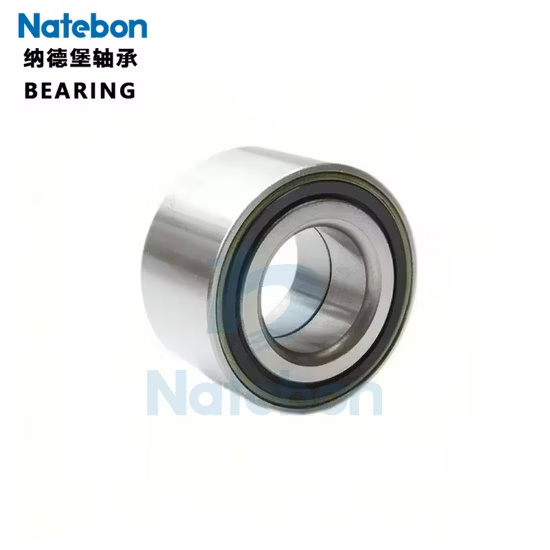
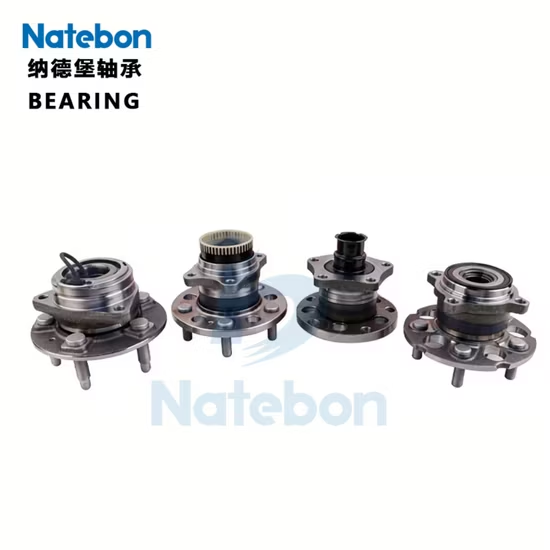
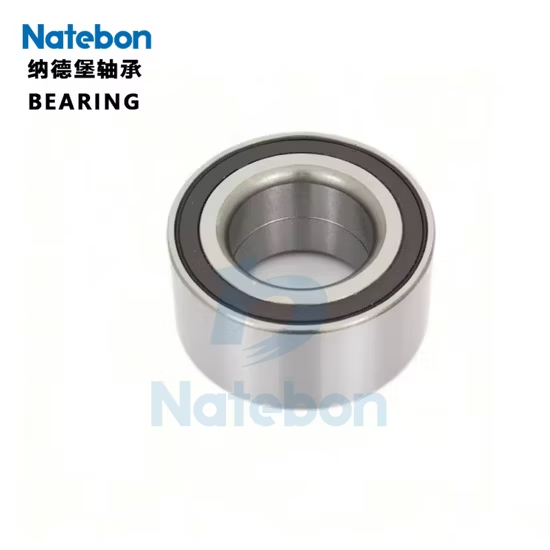
Mixed-brand fleet sourcing — consolidate Volkswagen, Toyota, and BMW hub unit requirements into a single verified shipment without juggling multiple regional vendors.
Technical Specifications
| Parameter |
Value |
| Product Type |
Wheel Hub Bearing |
| Material |
Chrome Steel |
| Precision Class |
P0 |
| Wheel Hub System |
3rd Gen Hub Unit |
| Steering System Application |
EPS (Electric Power Steering) Bearings |
| Suitable for Car Brands |
Volkswagen, WuLing, Benz, BMW, Hyundai, Honda, Toyota, Jeep, Nissan, Ford, Buick, Chery, Chevrolet, Cadillac, Geely, Roewe, Audi, Peugeot, Lexus, Volvo, Mazda, Kia |
| Customization |
Available |
| Origin |
China |
Application Suitability
| Industry |
Typical Applications |
| Passenger & Commercial Vehicles |
Wheel end assemblies, ABS sensor ring integrations, steering knuckle mounts |
| Green Energy Cars |
High-torque electric motor wheel ends, regenerative braking load zones |
| Steering Systems |
Electric power steering (EPS) column support, pinion gear shaft positioning |
Why Basic Part Numbers Cause Green Energy Vehicle Hub Failures
Matching the base number is never enough for modern electric vehicle wheel ends.
Working in the Pearl River Delta trade sector after years in quality inspection, I have seen countless green energy vehicles suffer premature wheel end failures simply because the cross-reference ignored critical internal variations. A batch of hub units once passed visual inspection with the correct basic designation, but the internal cage material was mismatched for the application, leading to early structural fracture under high-speed highway conditions. When sourcing from an automotive wheel hub bearing supplier, buyers must verify that the internal design, flange specifications, and ABS sensor ring configurations perfectly align with the original equipment requirements to avoid catastrophic field returns [NEED_CITE: rolling bearing failure mode classification per ISO 15243].

Matching 3rd Gen Hub Units to Electric Vehicle Dynamics
Third-generation hub units integrate the bearing and flange into a single pre-assembled module, which drastically simplifies wheel end mounting while demanding exact spline and bolt pattern alignment. As a dedicated automotive wheel hub bearing supplier, we review the specific vehicle platform to ensure the integrated flange matches the OEM torque specifications and structural load paths. This application-focused verification prevents the micro-movements that typically degrade ABS sensor signals and compromise steering stability in heavy battery-electric platforms.
Navigating High-Torque and Thermal Cycling Challenges
Electric and hybrid vehicles impose unique stress profiles on wheel ends, characterized by instant high-torque acceleration and aggressive regenerative braking forces that generate significant thermal cycling. These fluctuating temperatures directly impact internal clearance, making the initial P0 precision class and chrome steel material selection critical for maintaining dimensional stability across varying climates. Furthermore, the proximity to road debris and water splash zones demands robust sealing solutions that prevent contaminant ingress without introducing excessive rotational friction, which would otherwise drain the vehicle’s battery range [NEED_CITE: bearing life calculation under variable load and temperature per ISO 281].
Decoding Material and Integration Specifications
Chrome steel remains the standard choice for these applications due to its excellent fatigue strength and ability to withstand the dynamic radial and axial loads inherent in passenger vehicle cornering and braking. The 3rd gen hub unit design eliminates the need for manual preload adjustment during assembly, relying instead on factory-set internal geometry to maintain optimal rolling contact. For specialized steering applications, the EPS bearing variants are engineered to minimize friction torque, ensuring smooth steering feel and reducing the electrical load on the vehicle’s power steering motor. Customization options allow for specific flange geometries or sensor ring configurations when adapting these units for specialized commercial or modified green energy platforms.
The Hidden Costs of Overlooking Flange and Spline Details
Procuring a hub unit based solely on a generic cross-reference often results in subtle physical mismatches, such as incorrect spline tooth counts or misaligned ABS encoder rings, which trigger immediate dashboard fault codes. These integration errors lead to unplanned downtime, voided vehicle warranties, and severe reputational damage for repair shops and fleet operators. According to industry failure analysis frameworks, a significant share of premature wheel end replacements stems from these installation and specification mismatches rather than inherent material fatigue [NEED_CITE: automotive wheel bearing failure analysis and warranty claim trends].
Why Engineering Verification Matters in Sourcing
We maintain authorized distribution channels across all major international brands, allowing you to fulfill mixed-brand workshop requirements in a single coordinated order. Every batch we ship includes full traceability to the manufacturer, ensuring the chrome steel composition and heat treatment processes meet original equipment standards. Our cross-referencing protocol goes beyond basic dimensions, actively verifying cage materials, seal types, and flange offsets to prevent the exact high-speed failures I witnessed during my quality control years. Furthermore, our technical team provides application-based selection reviews to confirm that the chosen hub unit can handle the specific load, speed, and thermal conditions of your target vehicle platform.
Documentation & Authenticity
- Certificate of Conformity confirming P0 precision class and OEM-equivalent manufacturing standards.
- Batch and lot traceability linking each 3rd gen hub unit directly to the original production run.
- QR verification via brand official apps to instantly validate authenticity upon delivery.
- Material test report verifying the specific chrome steel alloy composition and heat treatment.
- Dimensional and running accuracy inspection report confirming flange runout and bore tolerances.
- Country-of-origin documentation prepared for seamless international customs clearance.
Storage, Handling & Mounting
- Store the 3rd gen hub units in original packaging to protect the integrated ABS sensor rings from magnetic interference and physical impact.
- Maintain consistent warehouse humidity to prevent surface corrosion on the exposed chrome steel flange mounting surfaces.
- Use clean gloves when handling EPS bearings to avoid transferring skin oils that could degrade specialized low-friction lubricants.
- Apply precise induction heating techniques for inner ring mounting, avoiding open flames that could destroy internal seal materials.
- Tighten the central axle nut to exact OEM torque specifications to establish the correct internal preload for the integrated hub design.
- Verify the ABS sensor air gap immediately after mounting to ensure proper signal transmission before the vehicle leaves the workshop.
Requesting Technical Application Review
To ensure precise fitment and optimal performance, please provide the specific vehicle make, model year, and original equipment part numbers for our engineering team to cross-reference. Sharing details regarding the operating environment, such as exposure to extreme temperatures or heavy payload conditions, allows us to recommend the most suitable material and seal configuration. Our technical staff will then verify the flange geometry, spline specifications, and sensor ring compatibility before finalizing your procurement documentation.
Frequently Asked Questions
Q: How do I determine the exact wheel hub bearing generation and specification for a specific vehicle model?
A: Identifying the correct generation requires checking the vehicle’s original equipment part number and verifying the physical mounting interface, such as the flange bolt pattern and spline count. Our engineering team cross-references these details against manufacturer databases to ensure the 3rd gen hub unit or EPS bearing perfectly matches your specific passenger or commercial vehicle platform requirements.
Q: What are the common failure modes of wheel hub bearings in green energy and heavy passenger vehicles?
A: Green energy vehicles often experience accelerated wear due to instant high-torque acceleration and heavy battery weight, leading to brinelling or raceway spalling. Additionally, contaminated lubricant from damaged seals causes abrasive wear, while incorrect installation torque can result in premature clearance loss and thermal binding, ultimately triggering ABS sensor faults and uneven tire wear.
Q: How does chrome steel material performance compare to other alloys in automotive wheel end applications?
A: Chrome steel provides an excellent balance of high fatigue strength, wear resistance, and structural integrity required to handle the dynamic radial and axial loads of passenger vehicles. While stainless variants offer better corrosion resistance for specialized environments, standard chrome steel remains the optimal choice for achieving the necessary load capacity and longevity in typical automotive and commercial wheel end applications.
Q: How to properly cross-reference OEM part numbers to avoid flange, spline, or ABS sensor ring mismatches?
A: Proper cross-referencing requires validating not just the basic bearing dimensions, but also the external integration features like the ABS encoder ring type, flange offset, and spline tooth profile. We verify these physical characteristics against the specific vehicle application data to ensure the replacement unit integrates flawlessly with the steering knuckle and drive shaft without triggering electronic fault codes.