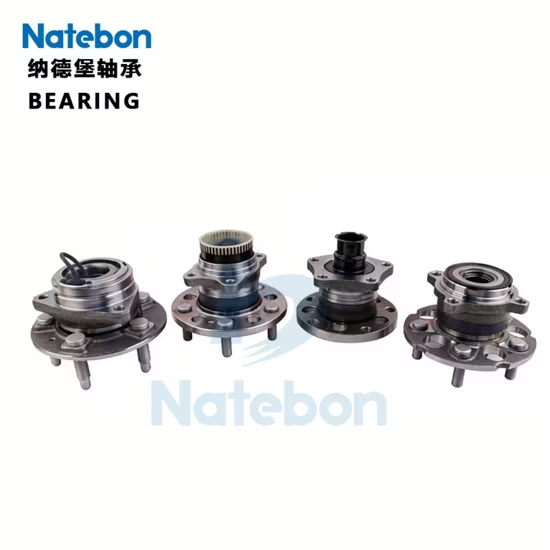
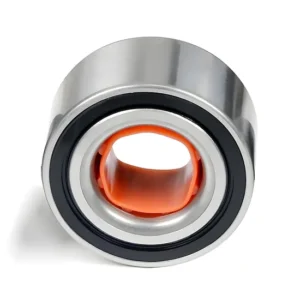
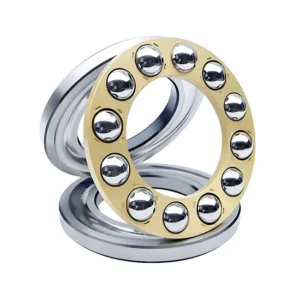
Multi-brand hub coverage — Source mixed OEM wheel hub and EPS steering units in a single consolidated shipment without juggling multiple vendors.
Technical Specifications
| Parameter |
Value |
| Product Type |
Wheel Hub Bearing |
| Tolerance Class |
P0 |
| Hub Unit Generation |
3rd Gen Hub Unit |
| Steering System Application |
EPS Bearings |
| Vehicle Compatibility |
Volkswagen, WuLing, Benz, BMW, Hyundai, Honda, Toyota, Jeep, Nissan, Ford, Buick, Chery, Chevrolet, Cadillac, Geely, Roewe, Audi, Peugeot, Lexus, Volvo, Mazda, Kia |
| Origin |
China |
| Customization |
Customized specifications available |
Application Suitability
| Industry |
Typical Applications |
| Passenger Vehicles |
Front and rear wheel hub assemblies with integrated ABS sensor rings |
| Commercial Vehicles |
Heavy-duty wheel end systems requiring high radial and axial load capacity |
| Automotive Steering Systems |
Electric Power Steering (EPS) column and pinion support bearings |
| Powertrain Systems |
Transmission and differential support locations requiring low friction |
Why an Experienced automotive wheel hub bearing supplier Prevents Premature Hub Failures
Matching the base OEM number is never enough to guarantee wheel end reliability.
I once inspected a batch of hub units that failed prematurely on the highway. The base designation matched the OEM spec perfectly, but the internal seal design and clearance were completely wrong for the actual operating temperature. The result was rapid grease leakage and catastrophic seizure. When sourcing chassis components, relying solely on a basic part number cross-reference ignores critical internal design variations. A qualified automotive wheel hub bearing supplier reviews the exact seal geometry and internal clearance to prevent these hidden mismatches [NEED_CITE: rolling bearing failure mode classification per ISO 15243].
Matching Hub Units to Modern Vehicle Architectures
Modern chassis designs demand highly integrated components. The 3rd generation hub units we supply feature pre-adjusted clearance and integrated flanges, which drastically simplify the mounting process while ensuring precise wheel speed sensor alignment. For steering columns, our EPS bearing configurations are engineered to handle the specific oscillating loads and low-friction requirements of electric assist mechanisms, ensuring smooth steering feel across diverse passenger and commercial platforms.
Navigating Road Shock and Thermal Expansion
Wheel end bearings endure severe combined loading, absorbing heavy radial impacts from potholes while managing axial thrust during cornering. These dynamic shocks demand optimized internal geometry to prevent raceway spalling. Furthermore, continuous brake heat transfer elevates operating temperatures, making correct internal clearance absolutely critical to accommodate thermal expansion without causing preload binding. Effective sealing is equally vital; contact seals must keep out abrasive road dust and water splash while minimizing frictional heat generation [NEED_CITE: bearing seal friction and contamination ingress dynamics].
Decoding Material and Tolerance Options
While P0 tolerance provides the necessary baseline dimensional accuracy for standard automotive wheel ends, the internal material execution defines long-term durability. Depending on the specific vehicle weight and exposure conditions, these assemblies are available in standard high-carbon bearing steel or specialized corrosion-resistant variants. Selecting the right material option ensures the bearing withstands harsh winter road salts or humid coastal environments without suffering from subsurface fatigue or surface corrosion, maintaining structural integrity throughout the vehicle’s service life.

The Hidden Costs of Overlooking Internal Design
Installing a hub unit with incorrect internal clearance or inadequate sealing leads directly to unplanned vehicle downtime and compromised safety. If the clearance is too tight, thermal expansion causes the bearing to seize; if too loose, excessive vibration damages the ABS sensor ring. According to ISO 281 fatigue life calculations, even minor deviations in internal geometry or lubrication quality drastically reduce the operational lifespan. These premature failures result in costly warranty voidances and severe reputational damage for fleet operators and repair workshops [NEED_CITE: ISO 281 dynamic load rating and fatigue life calculations].
Why Procurement Engineers Trust Our Technical Review
We eliminate the risk of receiving counterfeit units with soft inner rings by strictly controlling our authorized supply channels. Instead of just matching the base number, our engineering team verifies the exact internal seal type and clearance class required for your specific vehicle application. Every shipment includes full batch traceability, allowing you to verify authenticity directly through official brand apps. Furthermore, we provide comprehensive cross-brand interchange expertise, ensuring that mixed-brand fleet requirements are met with exact dimensional and performance equivalents.
Documentation & Authenticity
- Certificate of Conformity verifying P0 tolerance compliance for all hub units.
- Batch and lot traceability linking each EPS bearing to its specific production run.
- QR verification support via official apps to instantly confirm authenticity.
- Dimensional and running accuracy inspection reports confirming precise flange tolerances.
- Material test reports validating the metallurgical properties of the hub rings.
- Country-of-origin documentation for seamless customs clearance.
Storage, Handling & Mounting
- Keep 3rd Gen hub units in original packaging to protect integrated ABS sensor rings from physical damage.
- Store EPS bearings in climate-controlled environments to prevent condensation inside the steering column packaging.
- Use clean gloves when handling P0 tolerance hub flanges to prevent acidic sweat from causing surface corrosion.
- Apply precise torque to the central axle nut to establish the correct internal clearance in non-adjustable hub units.
- Never reuse the old axle nut when installing a new wheel hub bearing to prevent clamping force loss.
- Avoid using carbon steel tools on corrosion-resistant hub variants to prevent cross-contamination and localized rusting.
Initiating Your Technical Sourcing Request
To ensure exact fitment, please provide the specific vehicle make, model year, and the original OEM equipment number for cross-reference verification. For custom or heavy-duty applications, share the detailed installation space constraints, expected radial and axial loads, and the operating environment so our engineering team can determine the optimal internal design and material configuration. This technical data allows us to confirm the precise hub generation and sensor compatibility before finalizing your quotation.
Frequently Asked Questions
Q: How do I determine the exact hub unit generation and sensor requirements?
A: Provide the vehicle identification number or the original OEM equipment number. Our engineering team will cross-reference this data to confirm whether your application requires a 1st, 2nd, or 3rd generation unit, and verify the exact ABS sensor ring tooth count and signal type to ensure perfect compatibility with the vehicle’s electronic stability control system.
Q: What are the common failure modes in commercial versus passenger vehicles?
A: Passenger vehicle hubs typically fail due to water ingress and corrosion from road salts, degrading the grease. Commercial vehicle wheel ends usually suffer from surface fatigue and spalling caused by severe overloading and continuous shock impacts. We select specific seal designs and internal geometries to address these distinct failure mechanisms based on your fleet’s primary operating conditions.
Q: How do I select the right seal for harsh road conditions?
A: For environments with heavy dust, mud, or water splash, we recommend multi-lip contact seals that offer maximum contamination exclusion, though they generate slightly more friction. For high-speed highway applications where heat buildup is a concern, low-friction non-contact or light-contact seals are preferable. Share your typical driving environment so we can recommend the optimal sealing configuration.
Q: Why is cross-referencing the OEM number better than just using the base designation?
A: Base designations often only define the outer dimensions. Multiple internal designs, seal types, and clearance classes can share the same base number. By cross-referencing the exact OEM equipment number, we ensure the internal geometry, flange bolt pattern, and ABS sensor specifications perfectly match the original factory requirements, preventing premature failure and installation issues.
Q: What are the diagnostic signs of EPS steering bearing wear?
A: Early signs of EPS bearing degradation include increased steering effort, a notchy or gritty feeling when turning the wheel, and unusual whining or clicking noises from the steering column. Because EPS systems rely on precise low-friction movement, any increase in bearing friction forces the electric motor to work harder, potentially triggering steering system fault codes on the dashboard.