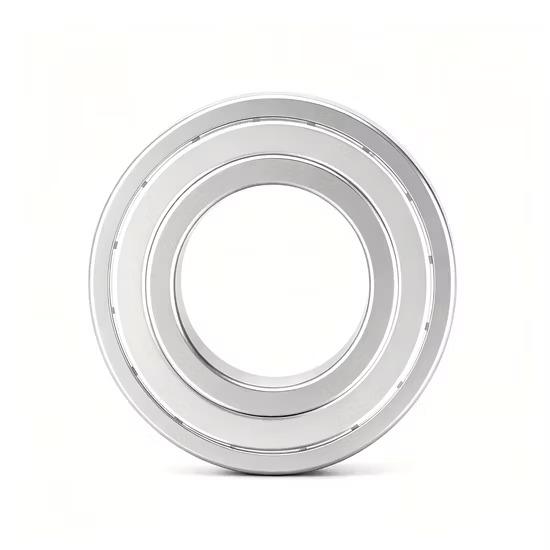
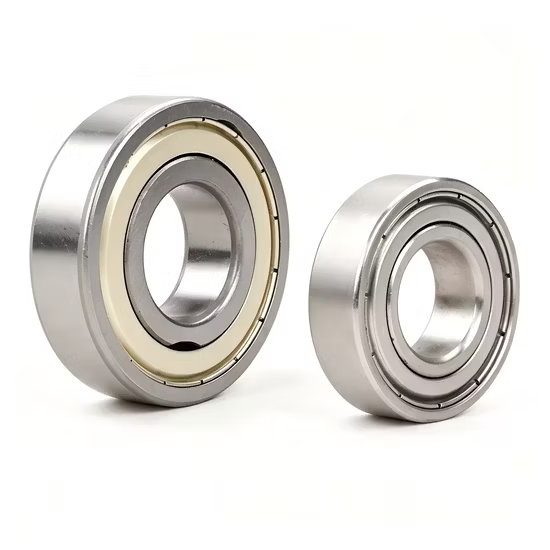
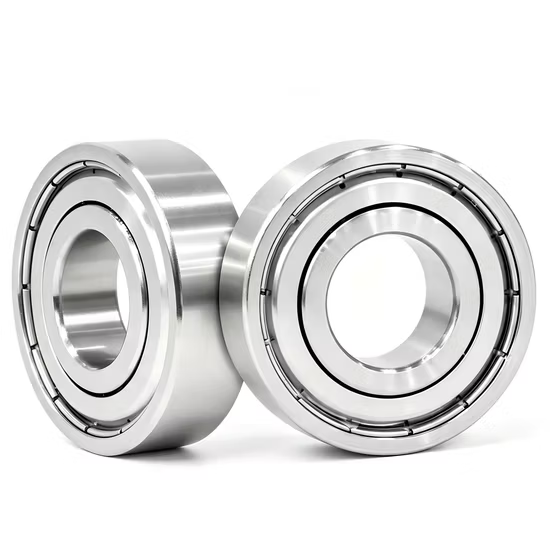
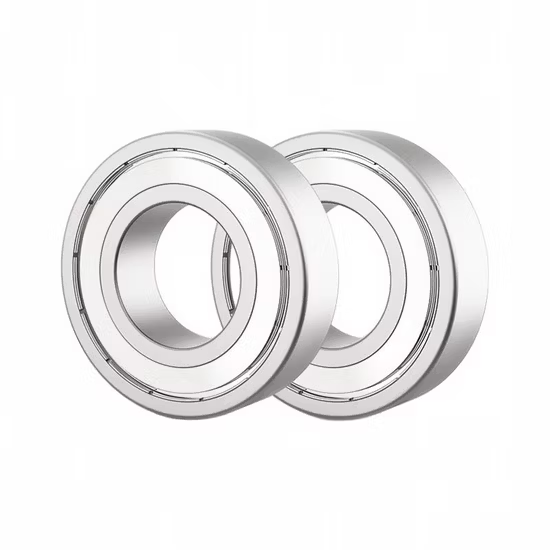
Precision Cross-Reference Alignment — We verify base dimensions alongside exact vacuum compatibility and P4/P5 tolerance classes to prevent thermal binding in coating chambers.
Technical Specifications
| Parameter |
Value |
| Product Type |
High Temperature Ceramic Bearing |
| Material |
Ceramic options available |
| Coating |
DLC (Diamond-Like Carbon) |
| Operating Temperature |
Up to 450°C |
| Vacuum Compatibility |
High vacuum compatible |
| Precision Class |
P4 / P5 |
Application Suitability
| Industry |
Typical Applications |
| Semiconductor Manufacturing |
Wafer transfer mechanisms and CVD chamber rotary feeds |
| Vacuum Coating |
Sputtering target rotation and evaporation source positioning |
Why Standard Bearings Fail Inside the Vacuum Chamber
Conventional lubricants outgas and standard steel cages degrade rapidly when exposed to high vacuum and extreme thermal cycling.
During a vacuum coating line shutdown in Dubai, I witnessed standard bearings seize completely due to thermal demagnetization and lubricant vaporization. Sourcing a reliable high temperature DLC coated ceramic bearing for vacuum equipment requires looking beyond basic dimensions. Many replacements fail because the cross-reference matches the bore size but ignores the outgassing limits of the cage material [NEED_CITE: rolling bearing failure mode classification per ISO 15243].

Matching Material Options to Extreme Vacuum Environments
Selecting the right high temperature DLC coated ceramic bearing for vacuum equipment depends on balancing thermal stability with outgassing limits. Ceramic rolling elements paired with specialized dry-film coatings provide the necessary operational stability where traditional greases would contaminate the chamber. Our technical review ensures the selected material options align perfectly with your specific vacuum level and thermal cycling profile.
Overcoming Thermal Shock and Lubrication Starvation
Vacuum coating processes subject rotary feeds to intense radiant heat and rapid cooling phases. These thermal shocks compromise standard bearing steel and cause conventional lubricants to vaporize, leading to immediate friction spikes. Without adequate lubrication, the rolling contact surfaces experience severe adhesive wear. The dry lubrication properties of the applied coating must withstand these extreme temperature gradients without delaminating [NEED_CITE: tribological behavior of dry coatings in vacuum environments].
Decoding Precision and Coating Integrity Requirements
Achieving P4 or P5 precision in high-temperature applications demands strict control over dimensional stability. The ceramic material options available offer a considerably lower thermal expansion rate compared to standard steel, preserving the internal clearance during heating cycles. Equally critical is the coating adhesion; the substrate heat treatment must be verified to ensure the diamond-like carbon layer maintains its structural integrity and does not flake off under continuous thermal stress.
The Hidden Costs of Incorrect Material Selection
Installing a bearing that lacks proper vacuum compatibility leads to rapid outgassing, which ruins the coating process and contaminates expensive semiconductor wafers. Premature seizure inside a sealed vacuum chamber forces unplanned downtime and requires a complete system venting to replace the failed component. According to ISO 15243 frameworks, surface distress from lubrication starvation is a primary failure mode in these environments [NEED_CITE: bearing damage analysis per ISO 15243].
Why Procurement Verification Matters for Vacuum Components
We review cross-references to ensure the P4/P5 precision class and vacuum compatibility are matched, not just the basic envelope dimensions. Every batch includes full traceability to the manufacturer, eliminating the risk of cloned components with soft inner rings. Our application-based selection review evaluates your specific thermal and load parameters to confirm the ceramic grade and coating thickness. We provide comprehensive documentation to verify the exact material properties before installation.
Documentation & Authenticity
- Certificate of Conformity confirming high vacuum material compliance.
- Batch traceability linking the ceramic components to the original production run.
- Official app QR verification to rule out cloned packaging and counterfeit parts.
- Material test report validating the ceramic grade and substrate heat treatment.
- Running accuracy inspection confirming P4/P5 tolerances prior to dispatch.
Storage, Handling & Mounting Protocols
- Store the ceramic components in original packaging to prevent moisture absorption before vacuum installation.
- Use cleanroom-compatible gloves when handling to avoid transferring skin oils to the coated surfaces.
- Avoid using standard carbon steel tools during mounting to prevent cross-contamination of the ceramic material.
- Protect the coated raceways from impact damage, as ceramic edges are sensitive to sharp mechanical shocks.
- Verify the P4/P5 precision alignment using calibrated gauges before sealing the vacuum chamber.
Engineering Support for Custom Vacuum Applications
To determine the exact configuration for your equipment, please provide the operating vacuum level, maximum thermal cycling range, and specific load profiles. Our engineering team will evaluate these parameters to recommend the appropriate ceramic grade and precision class. Sharing the OEM equipment number allows us to perform a comprehensive cross-reference check, ensuring complete compatibility with your vacuum coating or semiconductor machinery.
Frequently Asked Questions
Q: How do you determine the exact bearing designation for our vacuum level?
A: We calculate the required internal clearance and evaluate the outgassing limits based on your specific vacuum degree and thermal profile. By analyzing the rotational speed and applied loads, we identify the optimal ceramic material and coating thickness to ensure stable operation without contaminating the chamber environment.
Q: What are the material selection boundaries between ceramic and specialized steel?
A: Ceramic options are mandatory for high vacuum and extreme temperature zones where conventional lubricants vaporize and steel undergoes thermal demagnetization. Specialized high-temperature steels are only considered for peripheral, lower-vacuum support structures where outgassing limits are less restrictive and thermal expansion can be managed with adjusted clearances.
Q: How does the coating mitigate common failure modes in coating equipment?
A: In vacuum environments, traditional lubricants fail, causing severe adhesive wear and seizure. The diamond-like carbon layer acts as a solid lubricant, drastically reducing the friction coefficient. This prevents surface distress and cold welding between the rolling elements and raceways during continuous high-temperature operation.
Q: What verification procedures apply to high-precision ceramic bearings upon delivery?
A: Upon receipt, buyers should verify the batch traceability via official brand applications and inspect the accompanying dimensional inspection reports. We recommend checking the running accuracy and confirming the physical integrity of the coating layer to ensure the P4/P5 precision tolerances were maintained during transit and handling.
Q: What are the handling protocols for ceramic bearings in cleanroom environments?
A: Handlers must use lint-free, cleanroom-certified gloves to prevent hydrocarbon contamination on the coated surfaces. The components should remain in their protective packaging until the exact moment of mounting, and only non-marring, non-ferrous tools should be used to prevent edge chipping or metallic cross-contamination on the ceramic raceways.