
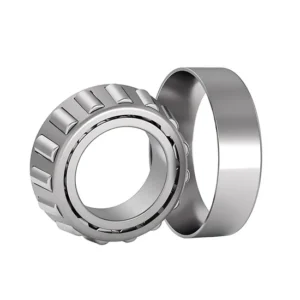
Timken Taper Roller Bearing 32203 30303 High Quality
View Details
SKF

-- SKF Authorized Engineering Partner
Adjustable Taper Roller Bearing for Heavy-Duty Mining and Construction Equipment — high-rigidity bearing steel designed for extreme shock loads and continuous operation.
15+ Certified Engineers On-Call
Free application analysis · Failure diagnosis · Custom modification guidance. Response within 24 hours.
Unified Multi-Brand Sourcing — Consolidate mixed-brand heavy machinery bearing requirements into a single traceable order without coordinating multiple vendors.
| Parameter | Value |
|---|---|
| Product Type | Tapered Roller Bearing |
| Structural Configurations | Single-Row, Double-Row, Four-Row |
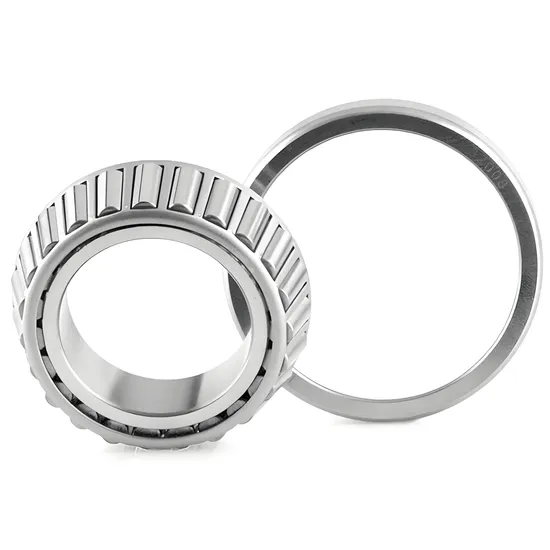
| Core Advantages | High Rigidity, Separability, Adjustable Clearance |
| Material Options | Available in standard bearing steel or specialized alloy variants |
| Customization Scope | Fully customized dimensions and internal geometry |
| Origin | China |
| Industry | Typical Applications |
|---|---|
| Mining Machinery | Crusher main shafts, vibrating screen exciters, dragline walking mechanisms |
| Automotive & Heavy Vehicles | Wheel hub assemblies, differential pinion shafts, transmission countershafts |
| Construction Machinery | Excavator swing drives, bulldozer final drives, crane slewing mechanisms |
| Industrial Gearboxes | Heavy-duty reduction gear shafts, extruder drive supports |
Matching the base dimension is never enough when an adjustable taper roller bearing supplier evaluates heavy-duty applications.
Overlooking internal geometry, row arrangement, and specific clearance setups frequently leads to thermal binding or premature cage deformation under extreme loads. In South American mining sites, I have dismantled overheated crusher spindles where a standard clearance was forced into an application demanding thermal expansion allowances, causing the cage to warp within weeks [NEED_CITE: rolling bearing failure mode classification per ISO 15243]. When heavy equipment operates under severe shock loads, every micron of internal tolerance dictates whether the machine runs smoothly or suffers catastrophic seizure.
Selecting the correct configuration requires a deep understanding of the combined loads your equipment faces. As an experienced adjustable taper roller bearing supplier, we evaluate whether a single-row setup suffices for unidirectional thrust, or if double-row and four-row arrangements are mandatory to handle reversing axial loads and heavy radial shocks simultaneously. The separable design of these components allows maintenance crews to adjust the internal clearance precisely during assembly, ensuring optimal load distribution across the rolling elements.
Heavy machinery operates in environments where severe shock loads and abrasive dust are constant threats. The combined radial and axial forces generated during rock crushing or earthmoving require high rigidity to prevent roller skewing and edge loading. At elevated temperatures generated by continuous friction, the initial clearance setup must accommodate thermal expansion without eliminating the necessary operating gap [NEED_CITE: thermal expansion effects on bearing internal clearance]. Furthermore, keeping abrasive particulates out of the raceway is critical, making the selection of appropriate external sealing arrangements just as vital as the internal geometry.
The performance of these bearings relies heavily on matching material options and structural types to the specific operating environment. Standard bearing steel provides the necessary core hardness for typical heavy-duty applications, while specialized alloy variants are available for operations involving extreme shock loads or corrosive elements. The choice between single, double, or four-row designs dictates how the bearing absorbs multi-directional forces. Proper heat treatment ensures the outer cups and inner cones achieve the required surface hardness and core toughness, preventing spalling under repetitive impact stresses.
Installing a component with the wrong internal design or inadequate clearance class inevitably results in unplanned downtime and severe mechanical damage. According to failure analysis frameworks like ISO 281, improper preload adjustment accelerates fatigue and generates excessive heat, leading to rapid lubricant degradation [NEED_CITE: bearing life calculation and failure mechanisms per ISO 281]. This thermal runaway ultimately causes catastrophic damage to the shaft and housing, voiding equipment warranties and forcing expensive, time-consuming repairs that halt entire production lines.
We prevent cross-reference errors by verifying internal design, row arrangement, and clearance classes, rather than just matching base dimensions. Our technical team reviews your specific load, speed, and temperature parameters to ensure the selected configuration prevents thermal binding in the field. We provide full batch traceability to the manufacturer, eliminating the risk of counterfeit components with soft inner rings. By handling mixed-brand requirements in a single order, we simplify supply chain management while ensuring every unit meets strict dimensional accuracy standards.
To ensure the selected configuration perfectly matches your machinery, please provide detailed equipment parameters including radial and axial loads, operating speeds, and thermal conditions. Our engineering team will use this data to determine the optimal row arrangement, material grade, and clearance setup for your specific application. Sharing the exact installation space constraints and environmental exposure details allows us to finalize the customized dimensions and recommend the most effective sealing solutions.
Q: How do I determine the correct row arrangement and clearance for my equipment?
A: The optimal configuration depends on the specific combination of radial and axial loads, as well as operating temperatures. Single-row designs handle unidirectional thrust, while double or four-row setups manage reversing loads. Providing your exact load data and thermal conditions allows our engineering team to calculate the necessary internal geometry and clearance class to prevent thermal binding and ensure optimal load distribution.
Q: What are the most common failure modes in heavy-duty mining applications?
A: Premature failures in mining machinery often stem from improper clearance adjustment, leading to thermal binding, or from abrasive contamination entering the raceway. Misalignment and severe shock loads can also cause roller skewing and edge loading, resulting in cage deformation or spalling. Proper installation procedures and robust external sealing are essential to mitigate these risks and extend the operational lifespan of the components.
Q: How does material selection impact performance in extreme environments?
A: Standard bearing steel offers excellent core toughness and surface hardness for most heavy-duty applications. However, environments with high moisture, corrosive chemicals, or extreme shock loads may require specialized alloy variants. The correct heat treatment ensures the material can withstand repetitive impact stresses without cracking, while maintaining the necessary wear resistance to prevent premature degradation of the rolling contact surfaces.
Q: What is the proper procedure for adjusting clearance during installation?
A: Because these components feature a separable design, the internal clearance must be precisely set during mounting by adjusting the axial position of the inner ring assembly relative to the outer cup. This involves measuring the starting torque or axial endplay to achieve the target preload or operating gap. Following the manufacturer’s specific adjustment protocols prevents excessive friction and ensures the bearing operates within its designed thermal limits.
Q: How are lead times managed for customized dimension specifications?
A: Manufacturing non-standard dimensions or specialized structural configurations requires dedicated production scheduling and thorough quality inspections. While typical multi-week lead times apply to highly customized batches, providing comprehensive technical requirements early in the inquiry process helps streamline the engineering review. We always confirm the exact production schedule and minimum order quantities before finalizing the procurement agreement.
Main shaft, gearbox, and generator bearings for onshore and offshore wind turbines. Engineered for 20+ year service life.
Crushers, conveyors, and processing equipment bearings designed to withstand shock loads and contaminated environments.
Rolling mill and continuous casting bearings rated for extreme temperatures, heavy loads, and aggressive lubricants.
Hub units, transmission, and electric motor bearings meeting TS 16949 requirements for passenger and commercial vehicles.
Machine tool spindle and robotics bearings with P4/P2 accuracy class for ultra-precise positioning and minimal vibration.
Pumps, fans, compressors, and conveyor systems across all manufacturing sectors requiring reliable, cost-effective bearing solutions.
Official partner since 1998 with direct access to SKF technical resources, genuine products, and engineering expertise.
In-house team provides application design, failure analysis, and predictive maintenance -- reducing bearing failures by 35%.
Every product undergoes rigorous pre-shipment inspection with full documentation for traceability and compliance.
Dedicated account managers and reliable delivery networks ensure on-time supply for enterprise clients worldwide.
Performance Metrics
35%
Failures Prevented
70%
Downtime Reduction
25+
Years Experience
24h
Quote Response
78% of large enterprises prefer suppliers offering integrated technical support and lifecycle services.
Custom bearing selection and system design based on your specific load conditions, speeds, temperatures, and environmental factors.
Root-cause investigation of bearing failures using metallurgical testing, vibration analysis, and operating data review.
IIoT-enabled monitoring with smart sensor bearings for real-time vibration, temperature, and RPM tracking.
Modified bearings with special coatings, seals, tolerances, or materials. Lead time 8-12 weeks from official channels.
Certified engineers available for on-site installation support, alignment checks, and commissioning assistance worldwide.
Long-term service agreements including regular maintenance checks, replacement scheduling, and performance reporting.
Free samples available for orders over $50K
Validated against your KPIs before full production commitment.
-- Get In Touch
Our certified engineers will review your application requirements and provide a detailed quote within 24 hours.
Address
No. 377 Bansongyuan Road, Huangpu District, Shanghai, China
Free Sample Program
Orders over $50K qualify for free product samples
Test against your KPIs before full production commitment. Ask our engineers for details.
Regarding: Adjustable Taper Roller Bearings for Heavy-Duty Industrial Use
-- Related Products

SKF Authorized Engineering Partner
Need technical support or a custom solution?
15+ certified engineers ready to help. Response within 24 hours.