
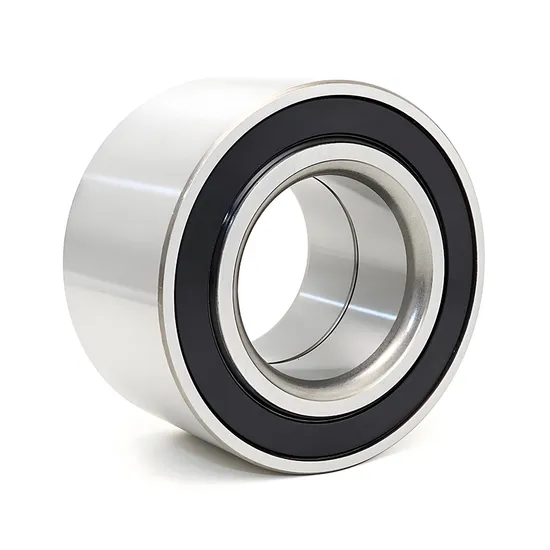
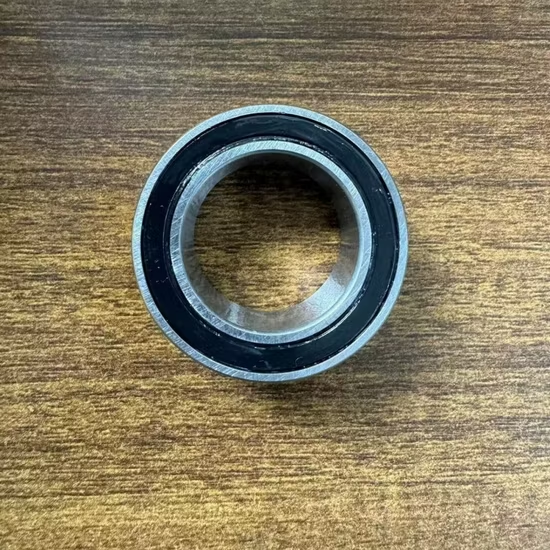
30bd4712du 30bd4720du Changan Benben AC Compressor Bearing
View Details
SKF
-- SKF Authorized Engineering Partner
Auto Wheel Hub Bearing for Passenger and Commercial Vehicles — P0 precision 3rd generation units compatible with EPS steering.
15+ Certified Engineers On-Call
Free application analysis · Failure diagnosis · Custom modification guidance. Response within 24 hours.
Unified Multi-Brand Sourcing — Consolidate mixed OE and aftermarket wheel hub requirements into a single traceable shipment without juggling multiple vendors.
| Parameter | Value |
|---|---|
| Product Type | Auto Wheel Hub Bearing |
| Precision Class | P0 |
| Wheel Hub System | 3rd Gen Hub Unit |
| Steering System Compatibility | EPS Bearings |
| Target Application | Passenger/Commercial Vehicles, Powertrain System |
| Suitable for Car Brands | Volkswagen, WuLing, Benz, BMW, Hyundai, Honda, Toyota, Jeep, Nissan, Ford, Buick, Chery, Chevrolet, Cadillac, Geely, Roewe, Audi, Peugeot, Lexus, Volvo, Mazda, Kia |
| Origin | China |
| Industry | Typical Applications |
|---|---|
| Automotive Repair & MRO | Wheel hub assemblies for passenger and commercial vehicle platforms |
| Powertrain & Steering Systems | Electric Power Steering (EPS) column and gear mechanisms |
Matching the base outer diameter is never enough when internal flange geometry and seal profiles differ.
Cross-reference errors often match the base designation but overlook internal design variations, causing thermal binding or structural fatigue in the field. When a standard hub is forced into an EPS-equipped chassis, the friction mismatch leads to steering feedback anomalies and premature wear. Sourcing from a reliable auto wheel hub bearing supplier prevents these integration failures by verifying internal clearances and seal types before dispatch. [NEED_CITE: rolling bearing failure mode classification per ISO 15243]
As an experienced auto wheel hub bearing supplier, we ensure the 3rd generation hub units match the exact flange bolt patterns and sensor ring configurations required by modern chassis. This integrated approach eliminates the play associated with older pressed-in designs, maintaining precise wheel alignment under heavy cornering loads.
Wheel hubs endure continuous exposure to road salt, high-pressure car washes, and abrasive dust, making seal integrity paramount. I have seen countless hub units fail prematurely because water breached compromised seals, washing out the grease and causing severe internal corrosion. Furthermore, EPS systems demand exceptionally low friction; any excess drag from incorrect seal contact pressure directly degrades steering feel and increases power consumption. [NEED_CITE: bearing seal friction and contamination ingress per ISO 281]
Third-generation hub units integrate the wheel flange and ABS sensor ring directly into the bearing assembly, drastically improving mounting rigidity compared to earlier generations. The P0 precision class ensures smooth rotation and minimal noise, which is critical for passenger comfort and accurate wheel speed sensor readings. Material and sealing options must be carefully matched to the operating environment; heavy-duty commercial applications require robust flange designs to handle higher static loads, while passenger vehicles prioritize low-friction seals for EPS compatibility.
Installing a hub unit with incorrect internal geometry or inadequate sealing leads to rapid degradation, often manifesting as wheel vibration or steering pull. These premature failures result in unplanned downtime, costly warranty claims, and severe safety risks if the wheel assembly detaches. Adhering to failure analysis frameworks helps identify whether the root cause was a manufacturing defect or an application mismatch. [NEED_CITE: rolling bearing failure mode classification per ISO 15243]
We verify cross-references against internal flange dimensions and ABS ring tooth counts, not just the base part number, preventing costly return shipments. Our inventory covers mixed-brand requirements, allowing you to source Volkswagen, Toyota, and Ford hub units in a single consolidated order. Every batch includes traceability documentation, ensuring you receive genuine components rather than refurbished units with soft inner rings. We also review application parameters like vehicle weight and EPS integration to confirm the selected hub generation meets the specific chassis demands.
Provide the exact vehicle VIN or OEM equipment number so our engineering team can verify the flange geometry, ABS ring configuration, and seal type. Sharing specific operating conditions, such as exposure to heavy road salt or extreme payload requirements, allows us to recommend the most durable material and sealing options for your fleet.
Q: How do I determine the exact wheel hub model for a specific vehicle?
A: Provide the vehicle VIN or the original OEM part number. Our engineering team uses these identifiers to verify the exact flange bolt pattern, ABS sensor ring tooth count, and spline dimensions, ensuring the replacement hub unit perfectly matches the chassis requirements without guessing.
Q: What is the main difference between 3rd generation and earlier hub units?
A: Third-generation units integrate both the wheel flange and the brake rotor mounting flange directly into the bearing assembly. This design significantly increases structural rigidity, simplifies installation by eliminating press-fit procedures, and provides a more stable mounting platform for ABS sensors compared to first or second-generation designs.
Q: What are the most common early failure modes for wheel hub bearings?
A: Premature failures typically stem from seal degradation allowing water and road salt to wash out the internal grease, leading to corrosion. Other frequent causes include improper installation torque, which distorts the bearing races, or overloading the hub beyond its static load rating, causing brinelling on the raceways.
Q: How do seal designs adapt to different climate and road conditions?
A: Hubs operating in wet or heavily salted environments require multi-lip contact seals to block moisture and abrasive dirt, though this slightly increases friction. For vehicles equipped with sensitive EPS systems, low-friction non-contact or optimized labyrinth seals are preferred to maintain precise steering feedback while still offering adequate contamination protection.
Main shaft, gearbox, and generator bearings for onshore and offshore wind turbines. Engineered for 20+ year service life.
Crushers, conveyors, and processing equipment bearings designed to withstand shock loads and contaminated environments.
Rolling mill and continuous casting bearings rated for extreme temperatures, heavy loads, and aggressive lubricants.
Hub units, transmission, and electric motor bearings meeting TS 16949 requirements for passenger and commercial vehicles.
Machine tool spindle and robotics bearings with P4/P2 accuracy class for ultra-precise positioning and minimal vibration.
Pumps, fans, compressors, and conveyor systems across all manufacturing sectors requiring reliable, cost-effective bearing solutions.
Official partner since 1998 with direct access to SKF technical resources, genuine products, and engineering expertise.
In-house team provides application design, failure analysis, and predictive maintenance -- reducing bearing failures by 35%.
Every product undergoes rigorous pre-shipment inspection with full documentation for traceability and compliance.
Dedicated account managers and reliable delivery networks ensure on-time supply for enterprise clients worldwide.
Performance Metrics
35%
Failures Prevented
70%
Downtime Reduction
25+
Years Experience
24h
Quote Response
78% of large enterprises prefer suppliers offering integrated technical support and lifecycle services.
Custom bearing selection and system design based on your specific load conditions, speeds, temperatures, and environmental factors.
Root-cause investigation of bearing failures using metallurgical testing, vibration analysis, and operating data review.
IIoT-enabled monitoring with smart sensor bearings for real-time vibration, temperature, and RPM tracking.
Modified bearings with special coatings, seals, tolerances, or materials. Lead time 8-12 weeks from official channels.
Certified engineers available for on-site installation support, alignment checks, and commissioning assistance worldwide.
Long-term service agreements including regular maintenance checks, replacement scheduling, and performance reporting.
Free samples available for orders over $50K
Validated against your KPIs before full production commitment.
-- Get In Touch
Our certified engineers will review your application requirements and provide a detailed quote within 24 hours.
Address
No. 377 Bansongyuan Road, Huangpu District, Shanghai, China
Free Sample Program
Orders over $50K qualify for free product samples
Test against your KPIs before full production commitment. Ask our engineers for details.
Regarding: 3rd Gen Auto Wheel Hub Bearing for Passenger & Commercial Vehicles
-- Related Products


SKF Authorized Engineering Partner
Need technical support or a custom solution?
15+ certified engineers ready to help. Response within 24 hours.