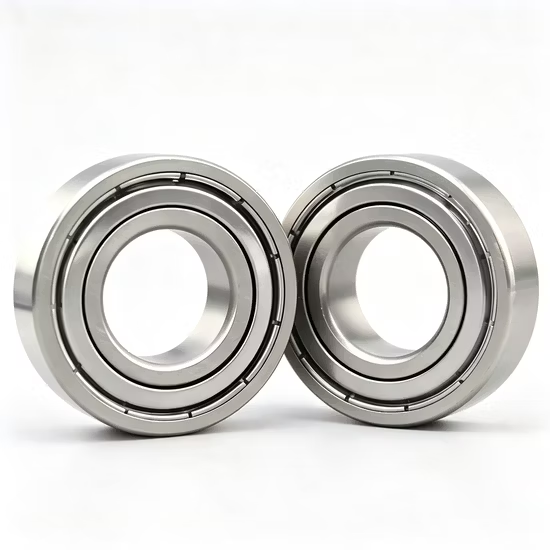
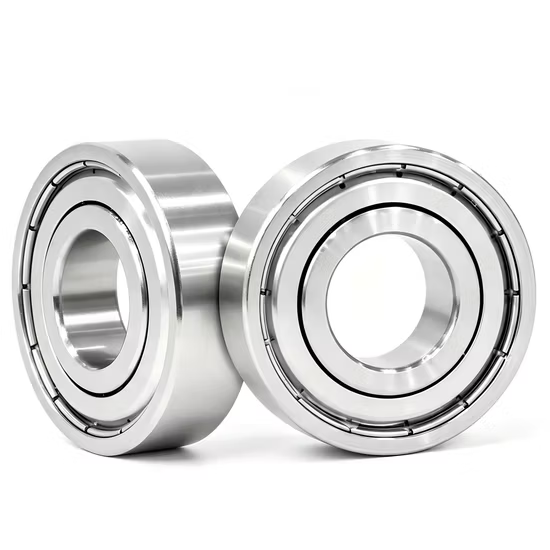
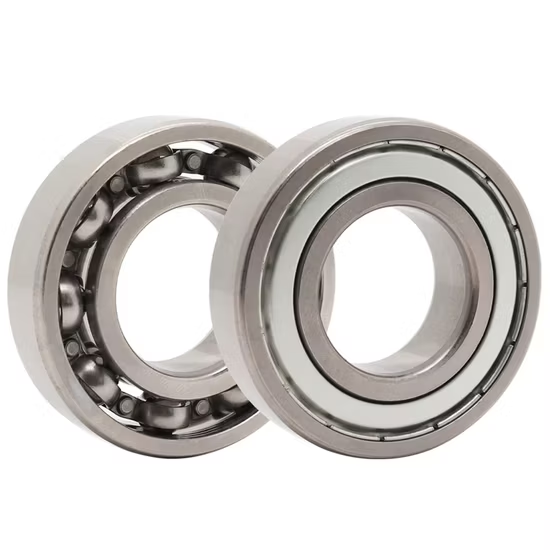
Cross-Reference Alignment — We match clearance, cage material, and precision suffixes rather than just base designations to prevent thermal binding in washdown zones.
Technical Specifications
| Parameter |
Value |
| Product Type |
Ball Bearing |
| Material Options |
SUS304 / SUS316 Stainless Steel |
| Key Features |
Corrosion Resistant, Antimagnetic, High Temperature Resistant, High Speed |
| Certification |
RoHS, CE |
| Primary Application |
Food Processing Equipment |
Application Suitability
| Industry |
Typical Applications |
| Food & Beverage Processing |
High-temperature washdown conveyors, commercial bakery ovens, sterilization tunnels |
| Packaging Machinery |
Automated filling nozzles, heat-sealing stations, sanitary capping mechanisms |
| Material Handling |
Washdown roller tracks, wet-environment sorting diverters, cleanroom transfer units |
Why Standard Bearings Fail Before the Food Machinery Does
Standard carbon steel bearings suffer catastrophic cage failure when exposed to high-temperature caustic washdowns.
Sourcing from a reliable high temperature stainless steel ball bearing supplier prevents the sudden line stoppages that occur when ordinary steel components rust and seize. I have seen entire food processing lines scrapped because procurement teams opted for cheaper carbon steel alternatives, only to watch them lock up completely after a single cycle of high-pressure hot water and chemical sanitizers. When internal components corrode, the resulting debris contaminates the product and forces unplanned maintenance [NEED_CITE: rolling bearing failure mode classification per ISO 15243].

Matching Material Options to Sanitary Processing Demands
Selecting the right alloy is critical when dealing with aggressive cleaning protocols. While standard bearing steel quickly degrades in wet environments, stainless steel variants provide the necessary defense against oxidation and chemical attack. A high temperature stainless steel ball bearing supplier typically offers choices between austenitic grades, allowing buyers to select the exact composition that balances corrosion resistance with mechanical strength for their specific machinery. This application-based selection ensures the bearing survives both the thermal shock of hot washdowns and the chemical exposure of industrial sanitizers.
Navigating Thermal Shock and Washdown Dynamics
Food processing environments subject components to extreme thermal cycling and aggressive fluid exposure. When high-pressure hot water hits the bearing housing, rapid temperature changes can cause standard internal clearances to collapse, leading to excessive friction and premature seizure. Proper material selection must account for these thermal expansion characteristics to maintain operational smoothness. Furthermore, the continuous presence of moisture and caustic cleaning agents demands materials that resist pitting and crevice corrosion, ensuring the structural integrity of the raceways and rolling elements over extended operational periods [NEED_CITE: bearing life calculation and environmental factors per ISO 281].
Decoding Material Grades for Washdown Survival
The choice between different stainless steel grades dictates the component’s lifespan in sanitary applications. Austenitic options like SUS304 offer excellent general corrosion resistance and antimagnetic properties, making them suitable for standard food-grade conveyors and packaging lines. For environments involving high chloride concentrations or stronger acidic sanitizers, upgrading to SUS316 provides substantially higher resistance to pitting and crevice corrosion. Understanding these metallurgical boundaries ensures that the selected bearing maintains its structural integrity without leaching harmful particles into the processing environment, satisfying strict hygiene compliance requirements.
The True Cost of the Wrong Material Choice
Installing standard steel components in sanitary zones inevitably leads to catastrophic operational disruptions. As corrosion takes hold, the resulting particulate debris compromises the raceways, triggering a chain reaction of premature failure that often damages adjacent machinery. This unplanned downtime halts production, spoils sensitive food batches, and triggers severe regulatory compliance violations. Relying on proper material specifications prevents these compounding losses, safeguarding both the equipment lifespan and the integrity of the final consumable product [NEED_CITE: contamination risks in food processing machinery per ISO 281].
Securing Traceability in Sanitary Supply Chains
Our distribution network ensures that every component is backed by verifiable material origins, eliminating the risk of receiving counterfeit parts with soft inner rings that fail under thermal stress. We match application parameters like chemical exposure and thermal cycling rather than just accepting base type descriptions, preventing costly cross-reference errors. By providing full batch traceability, we allow MRO managers to maintain strict compliance logs required by food safety auditors. This technical review process guarantees that the selected grade perfectly aligns with the specific washdown intensity of your facility.
Documentation & Authenticity
- Certificate of Conformity verifying RoHS and CE compliance for food contact zones.
- Batch and lot traceability linking each unit to the original stainless steel melt.
- QR verification via brand official apps to confirm genuine material grades.
- Material test reports validating SUS304 or SUS316 chemical composition.
- Dimensional and running accuracy inspection reports confirming smooth operation.
- Country-of-origin documentation supporting international sanitary import regulations.
Storage, Handling & Mounting Protocols
- Keep components in original moisture-barrier packaging until installation to preserve the factory-applied protective passivation layer.
- Use dedicated, non-magnetic tools during mounting to prevent cross-contamination from standard carbon steel workshop equipment.
- Avoid dropping or striking the outer ring, as austenitic stainless grades are more susceptible to surface brinelling than hardened bearing steel.
- Apply only food-grade, high-temperature synthetic lubricants if the specific application variant requires external replenishment.
- Ensure housing bores are thoroughly cleaned and dried before pressing to prevent trapping residual washdown chemicals against the outer diameter.
Engineering Review for Exact Designation Selection
To secure the precise component for your machinery, please provide the specific equipment model, available mounting space, and the exact nature of the operational loads. Detailing the washdown temperature range and the specific chemical agents used allows our engineering team to recommend the optimal material grade and internal clearance. In return, you receive a comprehensive technical review that guarantees the selected bearing will withstand your facility’s unique environmental challenges without premature degradation.
Frequently Asked Questions
Q: How do I determine the exact bearing designation for my food machinery?
A: Share your equipment parameters, including radial and axial loads, operating speeds, and the specific washdown temperatures. Our engineering team reviews these application variables to calculate the required internal clearance and select the appropriate stainless steel grade, ensuring the final designation perfectly matches your operational environment without risking thermal binding.
Q: When should I choose SUS316 over SUS304 for food processing?
A: Select SUS316 when your machinery is exposed to high chloride concentrations, salt sprays, or aggressive acidic sanitizers during washdown cycles. While SUS304 handles standard moisture and mild detergents effectively, SUS316 offers substantially higher resistance to pitting and crevice corrosion, preventing structural degradation in highly corrosive food preparation zones.
Q: What causes standard bearings to fail in high-temperature washdown areas?
A: Standard carbon steel bearings suffer rapid oxidation when exposed to hot water and caustic cleaning chemicals. This corrosion generates abrasive debris that destroys the raceways and causes the cage to seize. Additionally, thermal shock can collapse standard internal clearances, leading to excessive friction and catastrophic mechanical lockup during operation.
Q: How can I verify the material grade upon delivery?
A: Every shipment includes a material test report detailing the exact chemical composition of the stainless steel used. You can also utilize batch and lot traceability documentation alongside QR verification through official brand applications to confirm the authenticity of the alloy and ensure it meets the required sanitary processing standards.
Q: Are RoHS and CE certifications sufficient for direct food contact zones?
A: RoHS and CE certifications confirm the absence of hazardous substances and general safety compliance, which are critical baselines. However, for direct food contact zones, you must also verify that the specific lubricants used within the bearing are food-grade and that the material surface finish prevents bacterial harborage, ensuring full compliance with local health regulations.