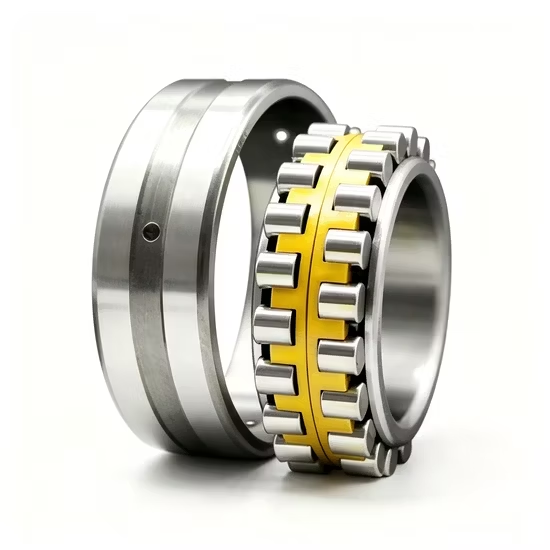
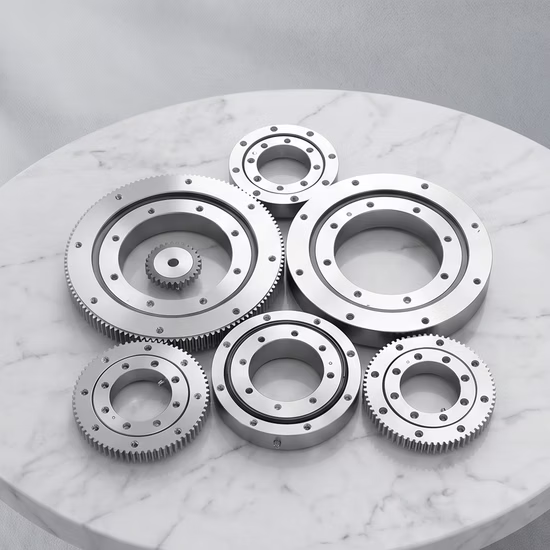
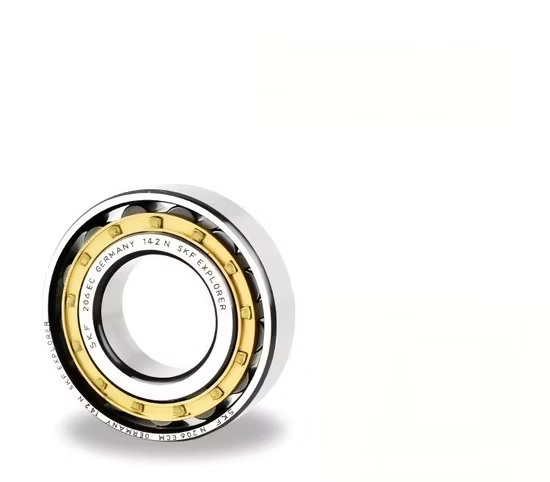
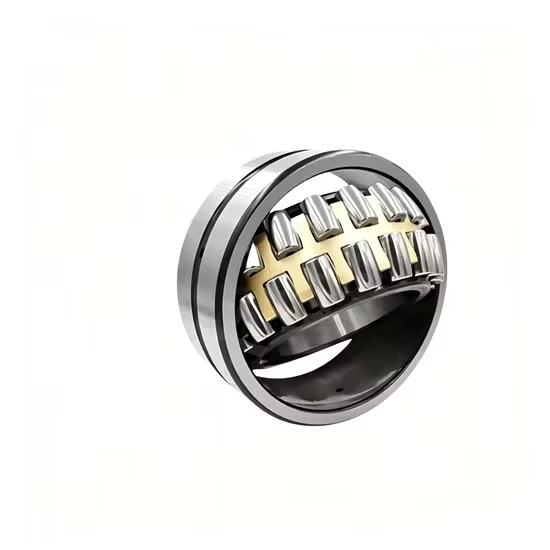
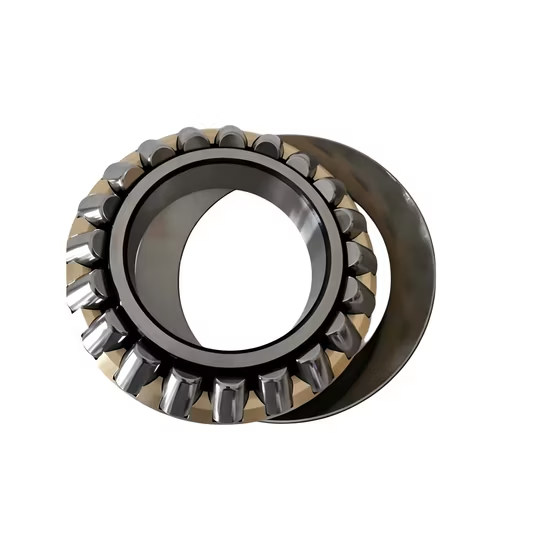
Verified Authenticity — Every batch includes scannable QR codes linked to the manufacturer’s official verification app, eliminating the risk of installing cloned components with soft inner rings.
Technical Specifications
| Parameter |
Value |
| Product Type |
Construction Machinery Bearing |
| Material Options |
Available in ceramic or stainless steel variants |
| Feature Profile |
Corrosion Resistant, Antimagnetic, High Temperature, High Speed |
| Certification |
RoHS, CE |
| Customization |
Available for non-standard dimensions |
| Application Scope |
Excavators, Loaders, Furnace Equipment, Industrial Machinery |
Application Suitability
| Industry |
Typical Applications |
| Mining and Earthmoving |
Excavator slewing mechanisms, loader articulation joints, bucket pivot pins |
| Steel and Metallurgy |
Continuous casting furnace rollers, heat treatment transfer conveyors |
| General Industrial MRO |
High-temperature processing lines, antimagnetic sorting equipment |
Why Standard Steel Fails in Heavy Equipment and Furnace Zones
Material degradation and thermal binding cause a significant share of catastrophic downtime in extreme environments. Selecting the correct construction machinery bearing supplier ensures that material properties align with the actual operating temperature and chemical exposure, rather than relying on generic catalog assumptions.
When standard bearing steel is subjected to intense heat or corrosive elements, the raceways lose hardness and the lubricant breaks down rapidly. I have inspected excavator slewing rings where standard clearance options seized completely because the thermal expansion of the shaft exceeded the internal gap. In furnace zones, oxidative scaling pits the rolling elements, leading to premature spalling and unplanned line stoppages [NEED_CITE: rolling bearing failure mode classification per ISO 15243].

Matching Material Variants to Extreme Operating Environments
As a dedicated construction machinery bearing supplier, we evaluate the specific thermal and chemical boundaries of your equipment before recommending a material path. Ceramic variants are utilized when the application demands electrical insulation, antimagnetic properties, and operation beyond the thermal limits of standard steel. Stainless steel options are deployed where moisture, chemical washdowns, or mild corrosive atmospheres would rapidly degrade carbon steel raceways. This targeted material selection prevents the structural collapse of the bearing under severe industrial exposure.
Navigating Thermal Expansion and Contamination Challenges
Heavy earthmoving equipment and industrial furnaces subject components to severe shock loads combined with intense thermal gradients. At elevated temperatures, standard internal clearances close up as the inner ring expands faster than the housing, causing the rolling elements to bind and generate excessive friction heat. Furthermore, construction sites and metallurgy plants introduce abrasive dust and metallic particulates that breach standard seals. Selecting the appropriate non-contact shielding or high-temperature seal variants is critical to prevent contaminant ingress without adding parasitic drag to the rotating assembly [NEED_CITE: thermal expansion effects on internal clearance in ISO 281].
Evaluating Material Options for Structural Integrity
The choice between ceramic and stainless steel variants depends entirely on the dominant failure risk in your specific application. Ceramic rolling elements are noticeably lighter and exhibit considerably less thermal expansion than steel, which helps maintain the required internal clearance in high-heat furnace conveyors. They also resist abrasive wear and prevent electrical pitting in motorized drives. Conversely, stainless steel variants provide the necessary structural toughness to absorb the heavy shock loads and impact forces characteristic of excavator booms and loader buckets, while offering substantially higher corrosion resistance in wet or chemically active environments.
The Hidden Financial Impact of Material Mismatch
Installing a standard steel component in a high-temperature furnace application inevitably leads to thermal seizure, resulting in catastrophic damage to the surrounding housing and drive shafts. Conversely, using standard variants in highly corrosive environments accelerates raceway pitting and structural fatigue. These material mismatches trigger premature failure and void equipment warranties, forcing procurement teams into emergency air-freight replacements and extended unplanned downtime. Adhering to material suitability frameworks prevents these compounding operational losses [NEED_CITE: economic impact of premature bearing failure in heavy machinery].
Securing Technical Alignment for Your Application
Sourcing from our network guarantees that cross-reference alignment covers the exact material composition and internal geometry required by your equipment, not just a matching base envelope dimension. We verify that high-temperature ceramic or stainless steel variants meet the specific load and speed demands of your excavator or furnace line. Every shipment is backed by full batch traceability, ensuring that the components installed in the field match the certified material test reports. This rigorous technical review eliminates the guesswork and prevents the costly installation of mismatched alternatives.
Documentation & Authenticity
- Certificate of Conformity confirming RoHS and CE compliance for international heavy machinery integration.
- Batch and lot traceability linking each unit to the manufacturer’s specific production run.
- QR verification via official brand apps to instantly rule out cloned or counterfeit components.
- Material test reports validating the exact ceramic or stainless steel composition for high-temperature use.
- Dimensional and running accuracy inspection reports for customized non-standard envelope sizes.
- Country-of-origin documentation to satisfy strict regional procurement and import regulations.
Storage, Handling & Mounting Protocols
- Store stainless steel variants away from carbon steel tooling to prevent cross-contamination and surface rusting.
- Handle ceramic components with padded slings, as the material is highly susceptible to edge chipping from impact.
- Keep customized units in original moisture-barrier packaging until the exact moment of installation.
- Verify internal clearance specifications after mounting to ensure thermal expansion gaps are maintained.
- Apply specified high-temperature lubricants immediately if the application requires open-type variants.
Initiating the Technical Selection Process
To ensure the selected material and internal geometry match your exact operational demands, please provide the specific equipment model, available mounting space, and detailed operating conditions. Sharing data regarding ambient temperature, exposure to corrosive agents, and shock load profiles allows our engineering team to determine the optimal variant. This technical review ensures the proposed solution aligns perfectly with your maintenance intervals and environmental constraints.
Frequently Asked Questions
Q: How do we determine the exact material and dimensions for our specific excavator or furnace equipment?
A: Provide the OEM equipment number, available mounting envelope, and detailed operating parameters including temperature and load profiles. Our engineering team uses this data to determine the exact material variant and internal geometry required, ensuring the selected component withstands your specific thermal and mechanical stresses without premature degradation.
Q: Which material variant is optimal for high-temperature and corrosive construction environments?
A: Ceramic variants are ideal for extreme heat, electrical insulation, and antimagnetic requirements, as they maintain structural integrity and resist thermal expansion. Stainless steel variants are better suited for applications involving heavy shock loads combined with moisture or chemical exposure, offering superior toughness and corrosion resistance compared to standard bearing steel.
Q: What are the common failure modes in extreme heat, and how does material selection prevent them?
A: In high-heat environments, standard steel suffers from lubricant breakdown, raceway softening, and thermal binding due to shaft expansion. Selecting ceramic variants mitigates these issues because the material naturally resists extreme temperatures, exhibits lower thermal expansion, and maintains dimensional stability, thereby preventing the seizure and catastrophic spalling associated with thermal overload.
Q: How do we manage custom dimensions and MOQ for non-standard construction machinery applications?
A: Share your precise dimensional drawings and operational requirements. We coordinate with manufacturing facilities to produce customized ceramic or stainless steel variants that meet your exact specifications. The minimum order quantity depends on the complexity of the non-standard design and the specific material certification requirements needed for your project.
Q: What certification and compliance documentation is provided for international export and heavy machinery?
A: Every shipment includes a Certificate of Conformity confirming RoHS and CE compliance, alongside material test reports validating the specific ceramic or stainless steel composition. We also provide dimensional inspection reports and country-of-origin documentation to ensure full traceability and compliance with international procurement standards for heavy industrial integration.