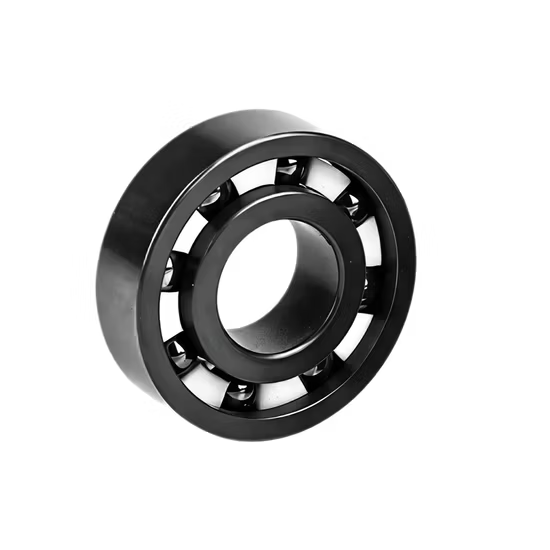
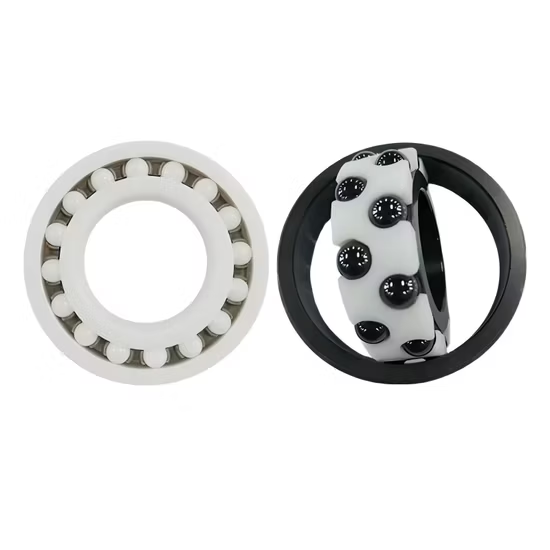
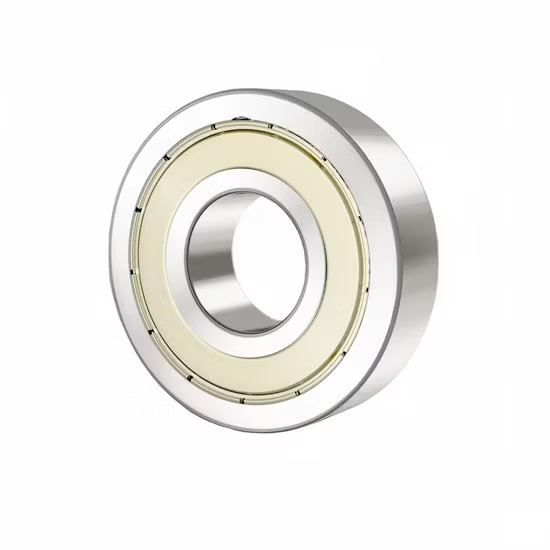
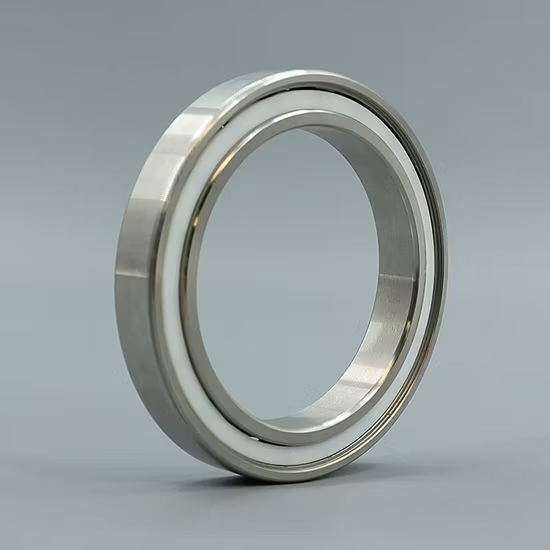
Traceable Batch Authenticity — Every shipped unit features a scannable QR code linking directly to the manufacturer’s official verification application, ensuring genuine ceramic construction.
Technical Specifications
| Parameter |
Value |
| Product Type |
Vacuum Ceramic Bearing |
| Material Options |
Ceramic rolling elements with specialized cage materials |
| Key Features |
Vacuum Compatible, Low Friction, Antimagnetic, High Temperature Resistant, Corrosion Resistant |
| Customization |
Available for non-standard dimensions and specific design requirements |
| Primary Applications |
Semiconductor Equipment, Vacuum Environments, Cleanrooms |
| Certification |
RoHS, CE |
Application Suitability
| Industry |
Typical Applications |
| Semiconductor Manufacturing |
Wafer handling robots, vacuum chamber transfer mechanisms, lithography alignment stages |
| Cleanroom Automation |
High-speed material handling arms, automated guided vehicle wheel hubs |
| Chemical Processing |
Corrosive fluid pump spindles, magnetic drive agitator shafts |
| High-Temperature Machinery |
Vacuum furnace rollers, heat treatment conveyor supports |
Outgassing Risks in Vacuum Chambers and Why the Right vacuum ceramic bearing supplier Matters
Standard steel components release trapped gases that ruin sensitive semiconductor processes, making material selection far more critical than basic dimensions.
During my early years conducting failure analysis, I witnessed a precision angular contact bearing catastrophically contaminate an ultra-high vacuum chamber simply because its cage lubricant vaporized under operational heat. The entire production line halted for days just to clean the chamber walls. When sourcing for semiconductor equipment, a minor oversight in material compatibility or lubrication outgassing data leads to scrapped wafers and massive financial losses [NEED_CITE: contamination mechanisms in vacuum environments per ISO 14644]. Procurement teams often focus solely on dimensional cross-referencing, completely missing the internal design nuances required for extreme environments.

Aligning Material Options with Cleanroom Demands
Selecting the correct rolling element and cage material dictates operational survival in reactive environments. Our engineering team reviews your specific load and speed parameters to recommend the optimal vacuum ceramic bearing supplier configuration, ensuring the selected ceramic grade and polymer cage prevent outgassing while maintaining dimensional stability. We validate these choices against your exact cleanroom classification requirements before finalizing any cross-reference.
Navigating Thermal and Magnetic Operational Extremes
Vacuum environments eliminate convective cooling, forcing components to endure extreme thermal gradients that rapidly degrade standard lubricants and alter internal clearances. Furthermore, semiconductor fabrication frequently involves intense magnetic fields where traditional ferromagnetic steel causes interference or attracts metallic debris. Engineers must evaluate how specific ceramic grades and non-metallic cages respond to these combined thermal and magnetic stresses, ensuring the selected assembly avoids thermal binding [NEED_CITE: thermal expansion dynamics in ceramic rolling elements].
Decoding Ceramic Grades and Cage Compatibility
Choosing between silicon nitride and zirconia variants depends entirely on the specific shock load and rotational speed profile of your equipment. While silicon nitride offers superior high-speed capabilities and lower density, zirconia provides enhanced fracture toughness for applications experiencing sudden axial impacts. Equally critical is the cage material; selecting PTFE over PEEK might satisfy basic friction requirements but could trigger severe outgassing if the operational temperature exceeds the polymer’s thermal threshold.
The Hidden Costs of Incorrect Material Specification
Installing a standard steel alternative in a vacuum chamber inevitably triggers outgassing, leading to immediate process contamination and voided equipment warranties. According to failure classification frameworks like ISO 15243, surface degradation caused by inadequate material resistance in corrosive or high-temperature environments accelerates fatigue spalling [NEED_CITE: rolling bearing failure mode classification per ISO 15243]. This premature failure forces unplanned downtime, requiring expensive cleanroom decontamination and complete mechanism rebuilds.
Securing Precision Through Verified Sourcing
We prevent cross-reference errors by matching not just the base envelope dimensions, but also the specific ceramic grade, cage polymer, and internal clearance required for your vacuum application. Our inventory provides full batch traceability, ensuring every unit meets strict RoHS and CE directives without relying on unverified secondary markets. We supply comprehensive material test reports and dimensional inspection data, giving your engineering team absolute confidence in the assembly’s cleanliness and precision before it ever enters the cleanroom.
Documentation & Authenticity
- Certificate of Conformity confirming RoHS and CE compliance for semiconductor export requirements.
- Batch and lot traceability linking directly to the manufacturer’s original production run.
- QR verification via brand official apps to guarantee genuine ceramic material composition.
- Material test report validating the specific ceramic grade and polymer cage outgassing limits.
- Dimensional and running accuracy inspection report ensuring precise fitment in high-speed spindles.
Storage, Handling & Mounting
- Keep original vacuum-sealed packaging intact until mounting to prevent cleanroom particulate contamination.
- Use dedicated lint-free cleanroom gloves to avoid transferring skin oils onto ceramic rolling elements.
- Avoid carbon steel tools during installation to prevent ferromagnetic cross-contamination on antimagnetic surfaces.
- Store in climate-controlled environments to protect specialized polymer cages from ambient humidity degradation.
- Verify residual internal clearance after mounting to accommodate vacuum chamber thermal expansion profiles.
Defining Your Exact Application Requirements
To ensure optimal performance, please provide your equipment model, available mounting space, and specific operational loads. Our engineering team will analyze your rotational speed and vacuum level to determine the precise ceramic grade and cage material required. Sharing details about thermal cycling and chemical exposure allows us to finalize the exact configuration and perform a comprehensive technical review.
Frequently Asked Questions
Q: How do we determine the exact ceramic grade for our vacuum equipment?
A: The selection between silicon nitride and zirconia depends on your specific rotational speed and shock load profile. Silicon nitride excels in high-speed, low-friction applications, while zirconia offers higher fracture toughness for impact loads. Provide your operational parameters, and our engineering team will specify the optimal grade.
Q: Why do standard bearings fail so quickly in vacuum environments?
A: Standard steel bearings rely on lubricants and cage materials that vaporize under vacuum and heat, causing severe outgassing. This contamination ruins sensitive semiconductor processes and leaves the bearing unlubricated, leading to rapid seizure. Ceramic assemblies utilize specialized vacuum-compatible polymers to prevent this degradation.
Q: Can ceramic bearings handle the same loads as stainless steel in semiconductor tools?
A: Ceramic materials possess different load-carrying characteristics and elasticity compared to stainless steel. While they offer superior hardness and temperature resistance, their dynamic load ratings must be carefully evaluated against your specific application forces. We review your exact load data to ensure the selected ceramic variant meets all safety factors.
Q: How are custom dimensions and tolerances handled for non-standard vacuum machinery?
A: We accommodate custom envelope dimensions and specialized tolerance requirements by collaborating directly with manufacturing facilities. By providing your exact housing and shaft specifications, we arrange for precision machining and thorough dimensional inspections, ensuring the custom assembly fits perfectly without requiring secondary modifications in your cleanroom.
Q: What certifications are required for exporting semiconductor machinery with these bearings?
A: Exported semiconductor equipment typically requires components to comply with strict environmental and safety directives. Our vacuum-compatible assemblies are fully RoHS and CE certified. We provide comprehensive material test reports and Certificates of Conformity to support your equipment’s international compliance and customs documentation.