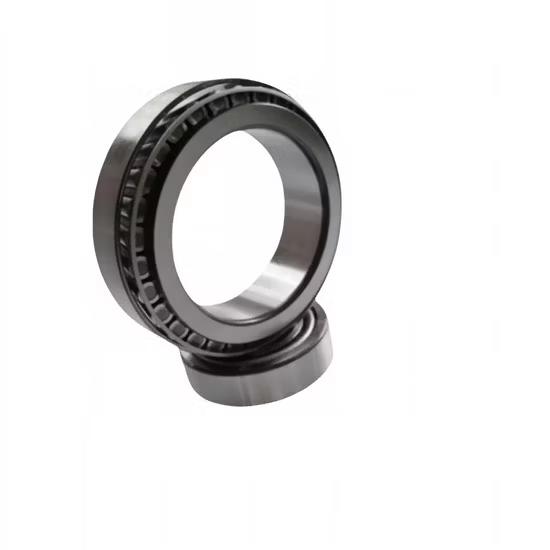
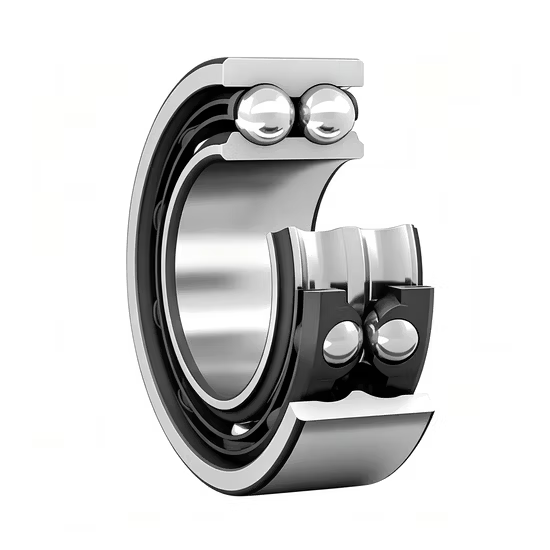
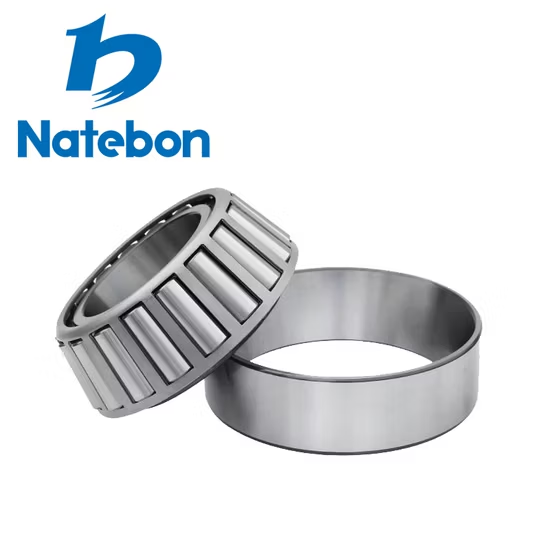
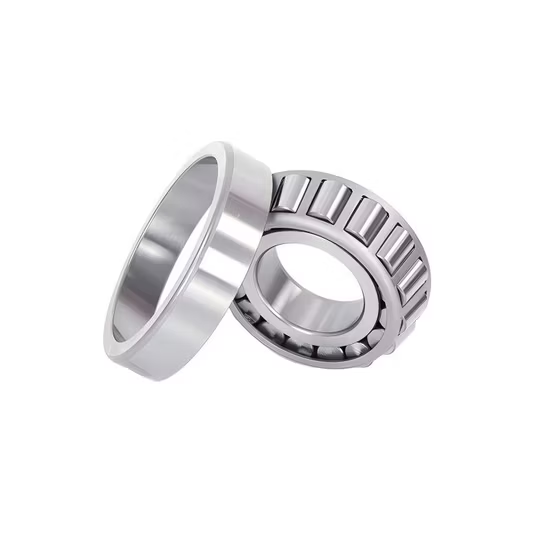
Exact Cross-Reference Alignment — We verify base series, internal clearance, and seal configurations to prevent thermal binding in heavy-duty wheel hubs.
Technical Specifications
| Parameter |
Value |
| Product Type |
Tapered Roller Bearing |
| Material Options |
High-carbon chromium bearing steel, with stainless steel variants available for highly corrosive environments |
| Certification |
ISO 9001 quality management, CE compliance for agricultural machinery exports |
| Characteristics |
High radial and single-direction axial load capacity, optimized roller geometry for combined loads |
| Applications |
Tractor wheel hubs, harvester axles, heavy-duty farm equipment steering mechanisms |
Application Suitability
| Industry |
Typical Applications |
| Agricultural Machinery |
Tractor front and rear wheel hubs, combine harvester steering axles |
| Heavy-Duty Farm Equipment |
Planter row unit drive wheels, sprayer boom articulation joints |
| Material Handling |
Forklift mast rollers, telescopic handler boom pivot points |
| Automotive and Heavy Vehicle Repair |
Commercial trailer wheel ends, heavy truck steering knuckles |
Why Wheel Hub Bearings Fail Before the Harvest Season Ends
Incorrect internal clearance substitution is the primary cause of catastrophic seizure in agricultural wheel ends.
When sourcing replacement components for heavy tractors, procurement teams often focus solely on the base dimension series. However, installing a standard clearance unit where a C3 clearance was specified for thermal expansion leads to rapid heat buildup under continuous field operation. I have seen harvesters in Latin America grind to a halt mid-season because a substituted bearing lacked the necessary internal gap, causing the rollers to skew and the cage to fracture under extreme radial loads [NEED_CITE: rolling bearing failure mode classification per ISO 15243]. Finding a reliable farm machinery tapered roller bearing supplier means securing a partner who validates the complete suffix string, not just the outer diameter and bore.

Matching Tapered Geometry to Field Loads
Agricultural wheel hubs endure severe combined loading, particularly when heavy implements are attached or when navigating uneven, muddy terrain. The tapered roller design inherently manages these simultaneous radial and axial forces by channeling them through the optimized contact angle of the raceways. As an experienced farm machinery tapered roller bearing supplier, we ensure the selected units feature the precise roller profile and cage geometry required to maintain film thickness under shock loads, preventing edge stress and premature spalling on the inner ring.
Navigating Dust, Moisture, and Lubrication Starvation
The operational environment for agricultural equipment is inherently hostile, characterized by abrasive topsoil dust, high humidity, and frequent exposure to corrosive fertilizers. These contaminants rapidly degrade lubricant integrity if the sealing arrangement is inadequate. While standard stamped steel cages offer cost efficiency, heavy-duty applications subjected to high vibration and shock loads often demand machined brass cages to maintain roller alignment [NEED_CITE: cage material selection for vibrating machinery]. Furthermore, the choice between contact and non-contact seals involves a critical trade-off between friction heat generation and absolute contaminant exclusion, directly impacting the relubrication interval and overall service life.
Decoding Material and Clearance Options
Selecting the appropriate material and internal geometry is paramount for maximizing uptime in the field. Standard high-carbon chromium bearing steel provides the necessary core hardness and fatigue resistance for typical wheel hub applications, while stainless steel variants are available for equipment frequently exposed to harsh chemical sprays. The internal clearance class dictates how the bearing behaves as the hub assembly heats up during continuous operation; a tighter clearance may suffice for slow-moving implement wheels, whereas high-speed transport axles require expanded clearances to accommodate thermal growth and prevent roller skidding.
The Hidden Costs of Unverified Replacements
Procuring unverified or incorrectly specified replacements introduces severe operational risks that extend far beyond the initial purchase price. A bearing with a soft inner ring or cloned packaging will inevitably lead to unplanned downtime, often occurring during the most critical harvesting windows. According to ISO 281 standards for dynamic load ratings, even minor deviations in material hardness or roller geometry drastically reduce the calculated fatigue life [NEED_CITE: bearing life calculation methods per ISO 281]. This premature failure not only necessitates costly emergency repairs but can also cause catastrophic damage to the surrounding hub housing and axle shafts, voiding equipment warranties.
Why Procurement Engineers Trust Our Verification Process
Our technical review process specifically targets the most common cross-reference errors in agricultural applications. We verify that the seal type matches the original equipment manufacturer’s specification, ensuring that a high-friction contact seal is not mistakenly replaced with a low-friction labyrinth design in dusty conditions. Every batch we supply includes full lot traceability, allowing MRO managers to track the manufacturing origin and verify authenticity via official brand applications. We also review the application parameters to confirm that the selected cage material can withstand the specific vibration frequencies of the target equipment, eliminating the guesswork from mixed-brand procurement.
Documentation & Authenticity
- Certificate of Conformity validating the specific clearance class for thermal expansion.
- Batch and lot traceability linking the wheel hub unit to the original manufacturer.
- QR verification via official brand apps to detect cloned packaging and soft inner rings.
- Material test report confirming core hardness for heavy-duty agricultural shock loads.
- Dimensional and running accuracy inspection report verifying tapered raceway geometry.
Storage, Handling & Mounting
- Store units in original packaging to protect the machined brass cages from humidity-induced corrosion.
- Use induction heaters for inner ring mounting to preserve the precise C3 clearance class.
- Apply clean gloves during handling to prevent fingerprint acids from etching the bearing steel.
- Follow OEM torque specifications for the axle nut to establish the correct residual internal clearance.
- Verify seal integrity before installation to ensure abrasive agricultural dust cannot penetrate the grease cavity.
Engineering Support for Exact Model Determination
To ensure the selected components perfectly match your equipment’s operational demands, please provide the specific tractor or harvester model numbers alongside the installation space dimensions. Sharing the typical radial and axial loads, operating speeds, and environmental conditions allows our engineering team to determine the exact designation and clearance class required. This technical review guarantees that the final specification aligns with the original design intent, eliminating the risk of field failures caused by generic substitutions.
Frequently Asked Questions
Q: How do I determine the exact designation for my harvester wheel hub?
A: Provide the original equipment manufacturer part number, the physical dimensions of the hub housing, and the typical operational loads. Our engineering team will cross-reference these parameters to identify the precise base designation, internal clearance, and seal configuration required, ensuring the replacement matches the original design intent without relying on generic approximations.
Q: Why is matching the internal clearance critical in agricultural environments?
A: Agricultural wheel hubs generate significant heat during continuous transport and field operations. If a standard clearance bearing is installed where an expanded clearance was specified, the thermal expansion will eliminate the internal gap, causing the rollers to skew and the bearing to seize. Matching the exact clearance class prevents this thermal binding and ensures reliable operation under heavy loads.
Q: What are the common failure modes for wheel hub bearings in muddy conditions?
A: In high-moisture and muddy environments, the primary failure mode is contaminant ingress, which degrades the lubricant and causes abrasive wear on the raceways. This is often compounded by moisture-induced corrosion on the roller ends. Utilizing bearings with the correct contact seal design and verifying seal integrity during installation are essential steps to prevent these premature failures.
Q: How can I verify the authenticity of the bearings before installation?
A: Every unit we supply features batch and lot traceability that can be verified using the official manufacturer’s mobile application. By scanning the QR code on the packaging and the bearing label, you can confirm the production origin and detect counterfeit products that utilize cloned codes or soft inner rings, ensuring only genuine components enter your maintenance inventory.
Q: What maintenance practices extend the life of heavy-duty farm machinery hubs?
A: Regularly inspect the hub seals for physical damage and monitor the hub temperature during operation to detect early signs of lubrication failure. Follow the equipment manufacturer’s relubrication intervals using the specified grease type, and ensure the axle nut is retorqued to the correct specification during routine servicing to maintain the optimal internal clearance and roller alignment.