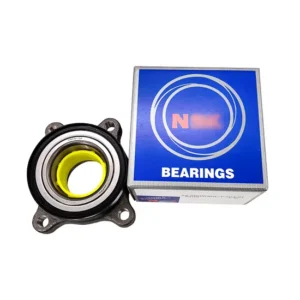
Mixed-Brand Fleet Sourcing — Consolidate passenger and commercial vehicle hub unit orders across multiple global marques through a single authorized distribution channel.
Technical Specifications
| Parameter |
Value |
| Product Type |
Wheel Hub Unit Bearing |
| Precision Class |
P0 |
| Hub System Generation |
3rd Gen Hub Unit |
| Steering System Application |
EPS Bearings |
| Suitable Vehicle Platforms |
Volkswagen, Toyota, BMW, Ford, and other major global marques |
| Origin |
China |
| Customization |
Customized dimensions and fitments available |
Application Suitability
| Industry |
Typical Applications |
| Passenger Vehicles |
Front and rear wheel hub assemblies, electric power steering column mechanisms |
| Commercial Vehicles |
Heavy-duty wheel end modules, powertrain support structures |
| Automotive Repair & MRO |
Fleet maintenance hub replacements, steering system overhauls |
Why Base Number Matches Still Cause Wheel Hub Seizures
Finding a reliable auto wheel hub bearing supplier is only the first step; overlooking internal design nuances often leads to catastrophic field failures.
Matching the outer dimensions means nothing if the internal clearance and cage material cannot withstand the thermal expansion and shock loads of daily driving.
I have seen too many aftermarket hub units fail prematurely on the Pearl River Delta auto parts routes. A visually perfect hub unit might harbor a cage material that shatters under impact, or a standard CN clearance that binds up when brake heat transfers into the knuckle. These cross-reference errors ignore the specific thermal and dynamic demands of the vehicle platform [NEED_CITE: rolling bearing failure mode classification per ISO 15243].

Matching the Hub Unit to the Vehicle Dynamics
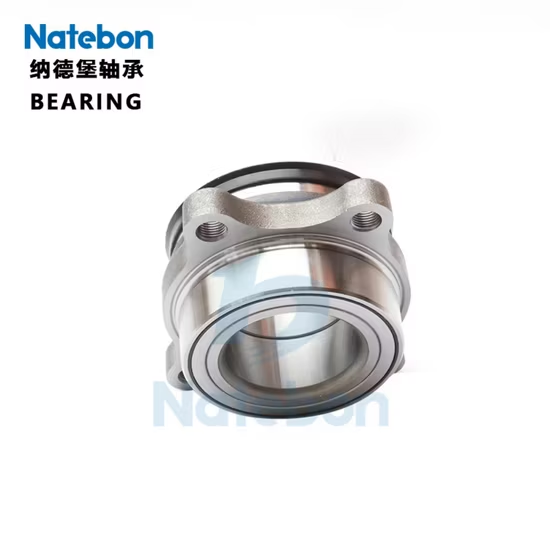
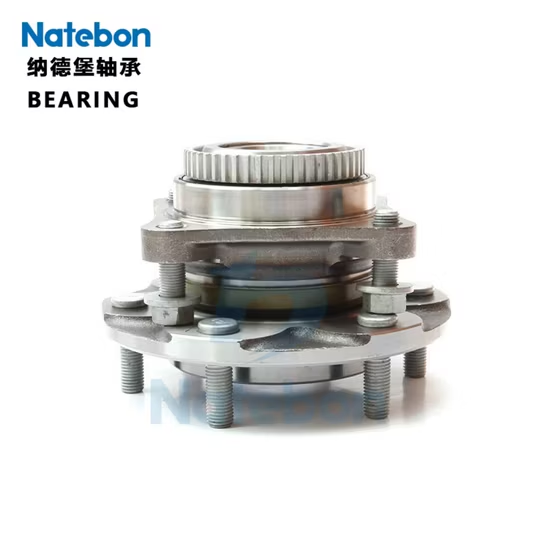
Selecting the correct 3rd generation architecture ensures the flange and sensor rings align perfectly with the chassis knuckle and ABS systems. As an experienced auto wheel hub bearing supplier, we verify that the internal raceway geometry and seal configurations match the specific suspension geometry of the target vehicle, preventing premature wear from misalignment.
Thermal and Mechanical Demands at the Wheel End
Wheel hubs endure severe combined loading, absorbing heavy radial weight and axial cornering forces while facing direct impact from road irregularities. Brake heat constantly transfers into the hub assembly, demanding adequate internal clearance to prevent thermal binding during sustained driving. The sealing arrangement must balance low rotational friction for fuel efficiency with aggressive exclusion of water, road salt, and abrasive particulates [NEED_CITE: bearing seal friction and contamination ingress trade-offs].
Decoding the 3rd Generation Architecture
The 3rd Gen Hub Unit integrates both inner and outer flanges, eliminating the need for press-fits into the knuckle and onto the CV joint, which drastically reduces installation errors. The P0 precision class provides the necessary baseline dimensional accuracy for smooth rotation and minimal NVH (noise, vibration, and harshness) in the cabin. For EPS applications, the internal raceway profiles are optimized to deliver the precise steering feel and low friction required by modern electric assist columns.
The True Cost of the Wrong Choice
Installing a hub unit with inadequate internal clearance or a weak cage design inevitably leads to unplanned downtime and catastrophic wheel detachment risks. When thermal expansion eliminates the operational clearance, the rolling elements skid, generating excessive heat and rapid material degradation. Such premature failures not only void vehicle warranties but also severely damage the reputation of the repair facility or fleet operator [NEED_CITE: impact of premature bearing failure on fleet operational costs].
Why Procurement Teams Trust Our Validation Process
We look far beyond the basic application number to verify the internal seal lip design and cage material suitability for the specific vehicle weight class. Our cross-referencing protocol ensures the hub generation and ABS encoder ring specifications perfectly match the original equipment requirements. Every shipment includes batch traceability, allowing you to verify the manufacturing origin and avoid the soft inner rings common in counterfeit assemblies.
Documentation & Authenticity
- Certificate of Conformity verifying P0 tolerance compliance for each hub unit batch.
- Batch and lot traceability linking the wheel hub directly to the manufacturer’s production records.
- QR verification via official brand apps to confirm the authenticity of the 3rd Gen hub assembly.
- Dimensional and running accuracy inspection reports validating flange runout and bore tolerances.
- Country-of-origin documentation supporting customs clearance for international automotive aftermarket shipments.
Storage, Handling & Mounting
- Store the 3rd Gen hub units in original packaging to protect the integrated ABS encoder rings from magnetic interference and physical damage.
- Maintain strict humidity control in the warehouse to prevent surface corrosion on the exposed wheel studs and flange surfaces.
- Use clean gloves during handling to avoid contaminating the pre-applied grease inside the sealed hub unit.
- Never apply axial pressing force directly on the outer flange during installation, as this will brinell the raceways and destroy the P0 precision alignment.
- Follow the vehicle manufacturer’s exact torque specifications for the axle nut to establish the correct internal preload and clearance.
Securing the Exact Fitment for Your Fleet
To ensure precise compatibility, please provide the specific vehicle make, model year, and original equipment part numbers for our engineering team to cross-reference. Sharing details about the operating environment, such as exposure to heavy road salt or extreme ambient temperatures, allows us to recommend the optimal seal and material variants. This technical review guarantees the selected hub units meet the exact load and durability requirements of your fleet.
Frequently Asked Questions
Q: How do I determine the exact hub unit generation required for my vehicle models?
A: The generation depends on the vehicle’s suspension and ABS design. First-generation units press into the knuckle, while 3rd generation units feature integrated flanges for both the wheel and the knuckle. Provide your OEM equipment numbers or vehicle chassis codes, and our engineering team will verify the exact generation, flange bolt patterns, and ABS encoder specifications required.
Q: What are the most common failure modes in automotive wheel hub applications?
A: Premature failures typically stem from contamination ingress destroying the grease, or improper installation torque causing internal brinelling. Thermal binding due to incorrect internal clearance is also frequent when brake heat transfers into the hub. We mitigate these risks by verifying seal integrity and ensuring the selected units match the thermal expansion characteristics of the original design.
Q: How should I handle customized dimensions and MOQ requirements for fleet maintenance?
A: For specialized commercial vehicles or modified platforms, we offer customized hub unit fitments. Provide the exact dimensional drawings, load profiles, and required flange configurations. Our technical team will review the application parameters to ensure the customized P0 precision hubs maintain structural integrity and meet your specific minimum order quantities for fleet rollout.
Q: Why is cross-referencing OEM equipment numbers critical for internal design matching?
A: Base application numbers often ignore critical internal differences, such as cage material strength or seal lip geometry. A hub unit might physically bolt onto the knuckle but fail rapidly if the internal clearance cannot handle the specific brake heat profile of that vehicle model. We use OEM numbers to verify these hidden internal design parameters, ensuring exact operational compatibility.