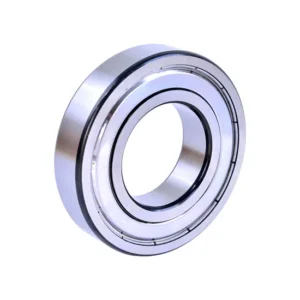
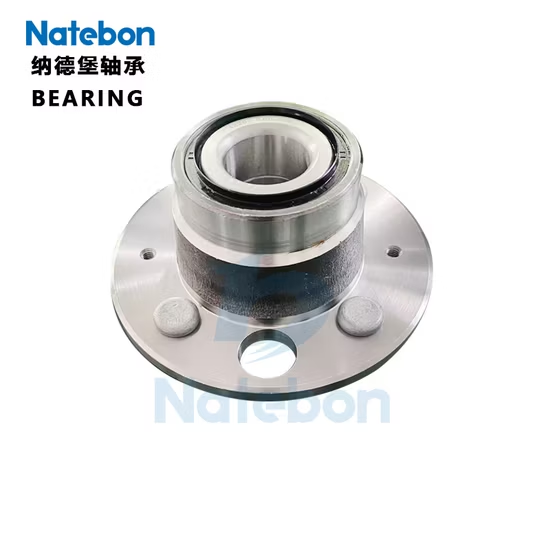
Factory-Sealed QR Verification — Every 3rd generation hub unit and EPS bearing ships with scannable tags linked directly to the manufacturer’s official authentication application, eliminating the risk of cloned packaging.
Technical Specifications
| Parameter |
Value |
| Product Type |
Wheel Hub Unit Bearing |
| Hub System Generation |
3rd Gen Hub Unit |
| Precision Class |
P0 (ISO 492 Normal Class) |
| Steering System Compatibility |
EPS Bearings |
| Suitable for Car Brands |
Volkswagen, WuLing, Benz, BMW, Hyundai, Honda, Toyota, Jeep, Nissan, Ford, Buick, Chery, Chevrolet, Cadillac, Geely, Roewe, Audi, Peugeot, Lexus, Volvo, Mazda, Kia |
| Application Scope |
Passenger/Commercial Vehicles, Powertrain System |
| Material Options |
High-carbon chromium bearing steel, martensitic stainless steel variants |
| Origin |
China |
Application Suitability
| Industry |
Typical Applications |
| Automotive Repair |
Passenger vehicle wheel hub assemblies, ABS sensor ring integration |
| Commercial Fleet Maintenance |
Light truck chassis wheel ends, heavy-duty powertrain support |
| Steering System Manufacturing |
Electric Power Steering (EPS) column and rack support bearings |
| Powertrain Assembly |
Transmission shaft support, differential carrier bearing positions |
When Base Numbers Match but the Hub Fails on the Road
Matching the OEM part number is only the first step; ignoring internal seal friction and ABS ring tolerances leads to premature wheel-end failure.
I transitioned into trading after working in quality inspection in the Pearl River Delta, where I once saw a batch of P0 grade bearings installed in high-speed spindles. The vibration levels immediately exceeded limits because the internal clearance and precision suffixes were completely overlooked. That same lack of attention to detail destroys automotive wheel ends. When an automotive wheel hub bearing supplier provides a unit with the correct outer dimensions but the wrong seal contact angle or ABS encoder pole count, the bearing might physically fit, but it will overheat or trigger dashboard fault codes within weeks [NEED_CITE: rolling bearing failure mode classification per ISO 15243]. Sourcing requires verifying the exact internal geometry, not just the external housing profile.

Matching Hub Units to Vehicle Dynamics
Selecting the correct wheel hub unit goes beyond matching bolt patterns. As a dedicated automotive wheel hub bearing supplier, we review the specific vehicle platform to ensure the 3rd generation hub unit provides the necessary flange rigidity for modern suspension geometries. The P0 tolerance ensures standard dimensional accuracy, but the internal raceway curvature must also align with the specific radial and axial loads generated by the vehicle’s curb weight and cornering forces.
Road Shock, Moisture, and Thermal Cycling
Wheel ends endure relentless environmental and mechanical abuse. Potholes and curbs introduce severe shock loads that test the structural integrity of the hub flange and the internal raceways. Meanwhile, water and road salt continuously attack the sealing interfaces. If the seal lip design generates excessive friction, it creates localized heat that degrades the grease, while inadequate sealing allows contaminant ingress that accelerates fatigue [NEED_CITE: bearing life calculation and environmental factors per ISO 281]. Electric Power Steering systems add another layer of complexity, demanding low-friction torque characteristics to maintain precise steering feel without introducing notchiness.
Material Options and Platform Compatibility
While standard high-carbon chromium bearing steel provides the necessary hardness and fatigue resistance for typical passenger vehicles, specific applications demand alternatives. For commercial vehicles operating in highly corrosive environments or coastal regions, martensitic stainless steel variants offer substantially higher corrosion resistance without sacrificing core load-carrying capacity. The 3rd generation design integrates the ABS sensor ring directly into the hub, meaning the material selection must also account for the magnetic properties required for accurate wheel speed signal transmission across various global automotive platforms.
The Hidden Costs of Incorrect Hub Selection
Installing a hub unit with mismatched internal clearance or inferior sealing leads to unplanned downtime and compromised vehicle safety. A bearing that runs too hot due to incorrect preload will experience rapid grease degradation, resulting in catastrophic wheel-end seizure. Furthermore, if the integrated ABS encoder ring has the wrong pole pitch, it will cause erratic braking system behavior, leading to warranty voidance and severe liability risks for the repair facility [NEED_CITE: automotive braking system sensor failure modes].
Why Procurement Engineers Trust Our Verification Process
We eliminate the guesswork that plagues the automotive aftermarket. Our cross-brand interchange process verifies not just the base hub designation, but the exact ABS sensor ring configuration and flange offset. We provide batch traceability for every 3rd generation hub unit, ensuring you know exactly which production run your inventory came from. Our technical team reviews EPS bearing requirements to confirm low-friction torque specifications are met. We also validate that the P0 precision class aligns with ISO 492 Normal Class standards before shipment, preventing the installation of out-of-tolerance components that cause premature wheel shimmy.
Documentation & Authenticity
- Certificate of Conformity confirming ISO 492 P0 tolerance for the specific hub batch.
- Original factory batch and lot traceability records linked to the production date.
- Scannable QR codes for instant verification via the manufacturer’s official application.
- Material test reports validating bearing steel fatigue life and ABS ring magnetic properties.
- Dimensional and running accuracy inspection reports verifying flange runout and bore sizes.
- Country-of-origin documentation for customs clearance and regional compliance.
Storage, Handling & Mounting
- Keep 3rd gen hub units in original moisture-barrier packaging until pressing to prevent flange corrosion.
- Use clean gloves when handling EPS bearings to avoid transferring skin oils to low-friction raceways.
- Never strike the integrated ABS sensor ring during installation to prevent signal dropout.
- Apply induction heating strictly to the inner ring when mounting powertrain support bearings.
- Torque the central axle nut to OEM specifications to establish correct internal preload.
- Avoid using carbon steel tools on stainless steel hub variants to prevent cross-contamination.
Technical Review and Selection Support
To ensure exact fitment and optimal service life, please provide the specific vehicle make, model year, and VIN or OEM equipment number. For custom powertrain or EPS applications, share the available installation space, expected radial and axial loads, and operating temperature range. Our engineering team will use this data to determine the precise hub generation, confirm ABS sensor compatibility, and recommend the appropriate material and sealing configuration for your operating environment.
Frequently Asked Questions
Q: How do I determine the exact hub generation and ABS sensor configuration for a specific vehicle?
A: You must cross-reference the vehicle’s VIN or the original OEM part number. We verify the physical flange dimensions, bolt pattern, and the specific ABS encoder ring pole count to ensure the replacement 3rd generation hub unit communicates correctly with the vehicle’s electronic stability control system, preventing dashboard fault codes.
Q: What are the common failure modes in wheel hub bearings and how does proper installation prevent them?
A: Premature failures typically stem from water ingress, incorrect axle nut torque, or impact damage to the raceways. Proper installation requires using a torque wrench to achieve the exact OEM preload specification, avoiding hammer blows to the hub flange, and ensuring the sealing surfaces are completely clean before mounting the new unit.
Q: How do environmental conditions influence material and sealing selection for commercial vehicle hubs?
A: Vehicles operating in coastal or heavily salted winter environments face severe corrosion risks. For these applications, we recommend specifying martensitic stainless steel variants and heavy-duty multi-lip seals. This combination provides substantially higher resistance to moisture ingress and chemical degradation compared to standard carbon steel and basic seal designs.
Q: How can I cross-reference OEM part numbers to aftermarket hub units without compromising safety?
A: Safe cross-referencing requires matching more than just the outer dimensions. We verify the internal clearance class, the exact ABS sensor type (active or passive), and the hub flange offset. This ensures the aftermarket automotive wheel hub bearing supplier provides a unit that meets the original structural and electronic safety requirements.
Q: What are the replacement indicators for EPS and powertrain bearings?
A: Key indicators include increased steering effort, noticeable notchiness when turning the wheel, or unusual whining noises from the powertrain assembly. Since these bearings are often sealed and non-relubricable, any sign of increased friction, axial play, or grease leakage necessitates immediate replacement to maintain precise vehicle control.