
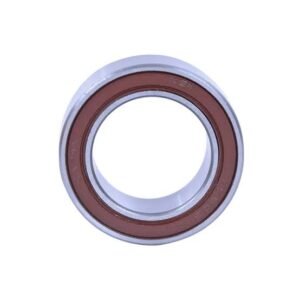
40bd49duk8a 657684 6559496 Auto Hub Bearing SKF
View Details
SKF

-- SKF Authorized Engineering Partner
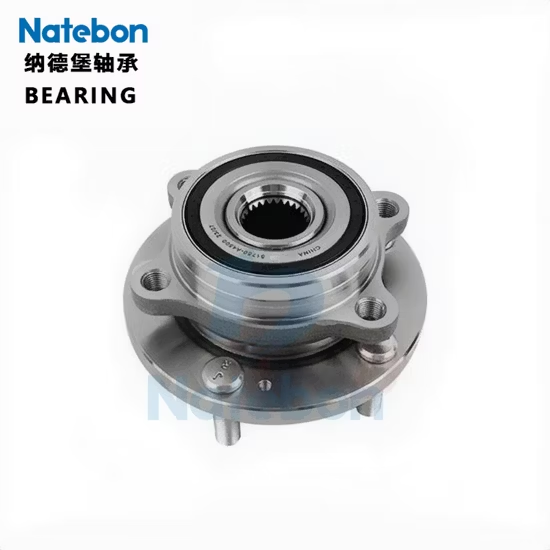
Wheel Hub Bearing for Passenger and Commercial Vehicles — engineered for electric power steering and standard automotive assemblies.
15+ Certified Engineers On-Call
Free application analysis · Failure diagnosis · Custom modification guidance. Response within 24 hours.
Factory Batch Traceability — Every wheel hub unit ships with verifiable lot documentation linked directly to the original production run.
| Parameter | Value |
|---|---|
| Product Type | Wheel Hub Bearing |
| Precision Class | P0 |
| Hub Unit Generation | 3rd Gen Hub Unit |
| Steering Application | EPS Bearings |
| Vehicle Compatibility | Volkswagen, WuLing, Benz, BMW, Hyundai, Honda, Toyota, Jeep, Nissan, Ford, Buick, Chery, Chevrolet, Cadillac, Geely, Roewe, Audi, Peugeot, Lexus, Volvo, Mazda, Kia |
| Origin | China |
| Specification | Customized |
| Industry | Typical Applications |
|---|---|
| Passenger Vehicles | Front and rear wheel end assemblies, integrated ABS sensor rings |
| Commercial Vehicles | Light duty truck wheel hubs, fleet maintenance replacement units |
| Automotive Steering | Electric Power Steering (EPS) column and rack support bearings |
| Automotive Powertrain | Transfer case support, differential carrier bearing locations |
Matching the outer flange diameter does not guarantee the internal spline count or ABS sensor ring configuration is correct.
Procurement teams often source replacements based solely on basic outer dimensions, overlooking critical internal design variations. This leads to immediate ABS warning light failures or premature wheel end breakdowns when the sensor air gap is incorrect. Sourcing from a reliable automotive wheel hub bearing supplier ensures that internal splines, flange bolt patterns, and mounting offsets are verified against the specific vehicle platform requirements [NEED_CITE: rolling bearing failure mode classification per ISO 15243].
Selecting the correct generation is critical for modern chassis dynamics. As an experienced automotive wheel hub bearing supplier, we focus on 3rd generation units that integrate the flange mounting and sensor readiness directly into the hub assembly. This integrated design reduces unsprung weight and simplifies the mounting process for passenger and commercial vehicle platforms.
Wheel hubs endure complex combined loading, including heavy radial loads from vehicle weight and significant axial thrust during cornering. Electric Power Steering systems introduce additional torsional stresses and require smooth rotational characteristics to maintain steering feel. Temperature fluctuations from braking systems can also affect internal grease stability, making thermal management and seal integrity vital for long-term reliability [NEED_CITE: bearing life calculation methods per ISO 281].
Third-generation hub units feature integrated flanges for both the wheel and the knuckle, eliminating the need for manual preload adjustments during assembly. The P0 precision class provides the baseline dimensional accuracy required for standard automotive assemblies, ensuring proper fitment without excessive play. While standard bearing steel is common, specialized variants are available in different material grades to address specific corrosion or weight reduction requirements in demanding environments.
Installing a hub unit with the wrong internal clearance or incorrect ABS ring tooth count results in immediate electronic stability control faults. Beyond electronic issues, improper flange offsets cause uneven brake pad wear and severe vibration at highway speeds. These misalignments lead to unplanned downtime, warranty voidance, and catastrophic damage to the steering knuckle or CV joint assemblies.
Managing mixed fleets requires precise cross-referencing that goes beyond basic part numbers. We verify the exact hub generation and sensor ring specifications for European, Asian, and domestic marques. Our technical team reviews application parameters to prevent cross-reference errors that ignore internal design differences. Mixed brand orders are consolidated, and every unit includes batch traceability to the manufacturer.
Provide the specific vehicle VIN, original equipment part number, or detailed chassis application parameters to initiate the selection process. Sharing information regarding the steering system type and ABS sensor configuration allows our engineering team to determine the exact hub generation required. This technical review ensures the proposed replacement matches all internal spline counts and mounting offsets.
Q: How do I determine the exact hub generation and sensor configuration for a specific vehicle VIN?
A: The most reliable method is providing the complete vehicle VIN alongside the original equipment part number. Our engineering team cross-references these details to confirm the specific 3rd generation flange pattern, internal spline count, and ABS sensor ring tooth configuration required for your exact chassis application.
Q: What are common failure modes in wheel hub units during fleet MRO inspections?
A: Technicians frequently observe premature wear caused by seal degradation allowing moisture ingress, or structural fatigue from improper mounting torque. ABS sensor failures also occur when replacement units feature incorrect air gaps or damaged magnetic encoder rings, triggering stability control faults across the vehicle network.
Q: How do material and heat treatment considerations differ for commercial versus passenger vehicle bearings?
A: Commercial vehicle hubs require enhanced load-carrying capacity and specialized heat treatment to withstand continuous heavy axial thrust and shock loads. Passenger vehicle units prioritize low friction and precise dimensional stability to support sensitive electric power steering systems and maintain optimal noise, vibration, and harshness characteristics.
Q: What is the proper mounting procedure for 3rd generation flange-type hub units?
A: Third-generation units require precise alignment and strict adherence to OEM torque specifications for both the knuckle and wheel flange bolts. Unlike older tapered designs, these integrated units do not require manual preload adjustments, but improper tightening sequences can distort the housing and cause premature raceway fatigue.
Main shaft, gearbox, and generator bearings for onshore and offshore wind turbines. Engineered for 20+ year service life.
Crushers, conveyors, and processing equipment bearings designed to withstand shock loads and contaminated environments.
Rolling mill and continuous casting bearings rated for extreme temperatures, heavy loads, and aggressive lubricants.
Hub units, transmission, and electric motor bearings meeting TS 16949 requirements for passenger and commercial vehicles.
Machine tool spindle and robotics bearings with P4/P2 accuracy class for ultra-precise positioning and minimal vibration.
Pumps, fans, compressors, and conveyor systems across all manufacturing sectors requiring reliable, cost-effective bearing solutions.
Official partner since 1998 with direct access to SKF technical resources, genuine products, and engineering expertise.
In-house team provides application design, failure analysis, and predictive maintenance -- reducing bearing failures by 35%.
Every product undergoes rigorous pre-shipment inspection with full documentation for traceability and compliance.
Dedicated account managers and reliable delivery networks ensure on-time supply for enterprise clients worldwide.
Performance Metrics
35%
Failures Prevented
70%
Downtime Reduction
25+
Years Experience
24h
Quote Response
78% of large enterprises prefer suppliers offering integrated technical support and lifecycle services.
Custom bearing selection and system design based on your specific load conditions, speeds, temperatures, and environmental factors.
Root-cause investigation of bearing failures using metallurgical testing, vibration analysis, and operating data review.
IIoT-enabled monitoring with smart sensor bearings for real-time vibration, temperature, and RPM tracking.
Modified bearings with special coatings, seals, tolerances, or materials. Lead time 8-12 weeks from official channels.
Certified engineers available for on-site installation support, alignment checks, and commissioning assistance worldwide.
Long-term service agreements including regular maintenance checks, replacement scheduling, and performance reporting.
Free samples available for orders over $50K
Validated against your KPIs before full production commitment.
-- Get In Touch
Our certified engineers will review your application requirements and provide a detailed quote within 24 hours.
Address
No. 377 Bansongyuan Road, Huangpu District, Shanghai, China
Free Sample Program
Orders over $50K qualify for free product samples
Test against your KPIs before full production commitment. Ask our engineers for details.
Regarding: 3rd Gen Wheel Hub Bearing EPS Supplier for VW Benz BMW Toyota
-- Related Products

SKF Authorized Engineering Partner
Need technical support or a custom solution?
15+ certified engineers ready to help. Response within 24 hours.